
Dry Rot vs. Termite Damage: How to Tell Which You Have
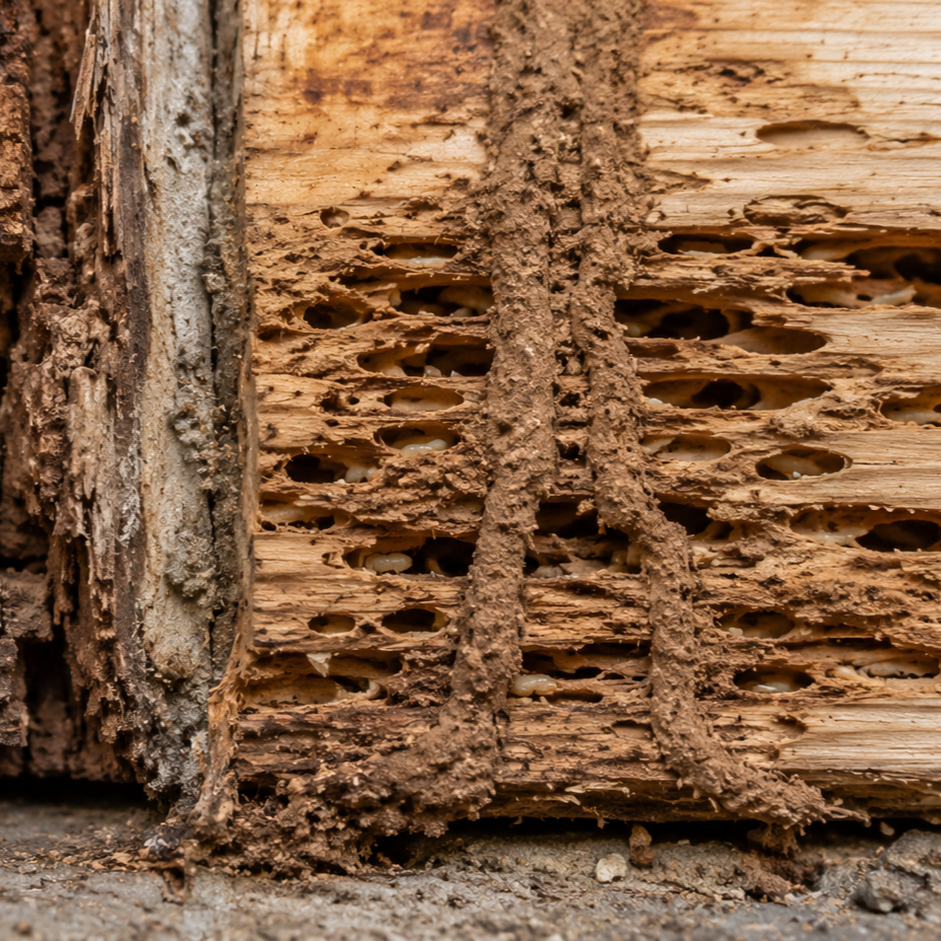
You press a screwdriver into a board near the foundation, and it sinks in as if the wood were cardboard. Something has been quietly eating your house — but what? Dry rot and termite damage both turn solid lumber into something soft and failing, and homeowners mix them up constantly. They call for completely different fixes, though, so telling them apart is the first real step. The good news is that each leaves clues you can learn to read.
Quick Answer: Both ruin wood, but they leave different fingerprints. Dry rot is fungal decay — the wood turns brown, cracks into cubes, and crumbles dry and powdery, always with a moisture source nearby. Termites, usually subterranean here, leave pencil-width mud tubes and eat wood from the inside out, leaving a thin shell with soil packed in the galleries. The catch: both are driven by moisture, and a single leak can cause both at once — so finding the water source matters as much as the ID.
What Each One Actually Is
"Dry rot" is a misleading name. It's wood decay caused by fungi — specifically brown rot, which feeds on the wood, leaving it brown and brittle. And despite the name, it can't happen without moisture: the USDA is blunt that the term is a misnomer, because wood must have available moisture for decay to occur. The wood only looks dry and powdery once the fungus has finished its work and the wood dries out. While it's active, there's water in it.
Termite damage is the work of insects. In the greater Sacramento area, the most common culprit is the subterranean termite, which nests in the soil and travels up into wood, eating it from the inside. There are also drywood termites, which live entirely within the wood and need no soil contact. The two leave different signs, but both hollow out lumber while often leaving the surface looking deceptively intact.
The Signs That Tell Them Apart
This is where you do your detective work. Match what you're seeing to the table, then look closer.
| Clue | Points to dry rot | Points to termites |
|---|---|---|
| Cracking pattern | Cubical — splits across and with the grain into cubes | Hollowed galleries following the grain |
| Surface | Crumbly, dry, powdery when advanced | Thin, paper-like shell; sounds hollow when tapped |
| Mud tubes | None | Pencil-width earthen tubes on foundations/walls |
| Inside the wood | Brown, brittle fungal decay | Soil packed in the galleries (subterranean) |
| Pellets/frass | None | Small six-sided pellets (drywood termites) |
| Smell | Musty, fungal | None distinctive |
| Always nearby | A moisture source | Soil contact or a moisture source |
The two clearest telltale signs: cubical cracking — wood that breaks into little cube-shaped chunks like a dried-out brownie — is the signature of brown rot. And mud tubes — thin tunnels of soil and saliva running up a foundation wall or pier — are the signature of subterranean termites; break one open and you may find cream-colored workers inside. If you see soil packed into the wood's galleries, that's termites. If the wood is brittle, brown, and crumbling near a leak with no tubes anywhere, that's dry rot.
The Overlap Nobody Warns You About
Here's the insight that trips up even careful homeowners: both problems are driven by water, and one leak can cause both. Decay fungi need moisture to break down wood, and subterranean termites need moisture too — in fact, they're drawn to wood that's already slightly decayed, because the fungus has done some of the chewing for them and softened it. So finding mud tubes doesn't rule out rot, and finding cubical cracking doesn't rule out termites. A chronically damp crawl space, a leaking pipe, or a window that was never properly sealed can set the table for both at once.
That's why the smartest first question isn't only "which one is it?" but "where is the water coming from?" Pros confirm the damage by probing the wood and reading moisture levels, and thermal imaging can find the wet spot behind a wall or under a floor that's feeding the problem in the first place.
Who to Call — and the Fix That Sticks
The repairs are quite different, and they often need two different professionals. Confirming and treating termites is the job of a California-licensed pest control operator — state law restricts who can apply termiticides, and there's no effective over-the-counter cure for an active infestation. Repairing the damage — replacing the rotted or eaten structural and protective wood and, above all, fixing the moisture source — is the work of a licensed contractor.
And that moisture source is the part you can't skip. Treat the termites, but leave the leak, and you've left the conditions that invited them. Replace the rotted board, but ignore the dripping pipe behind it, and the new wood rots too. Whether the culprit turns out to be fungus, insects, or both, the durable fix always includes stopping the water and repairing the wood so the conditions don't simply rebuild the problem.
Frequently Asked Questions
Look at how the wood fails. Dry rot cracks into cube-shaped pieces, turns brown and crumbly, and smells musty, always near a moisture source. Termites leave pencil-width mud tubes on foundations and hollow out the wood from inside, leaving a thin shell with soil packed in the galleries. Mud tubes mean termites; cubical cracking with no tubes means dry rot.
No — the name is a misnomer. Dry rot is fungal decay that requires moisture to happen; the wood is wet while it's actively rotting. It only looks dry, brown, and powdery after the fungus has finished and the wood dries out. That's why there's always a moisture source nearby, and why fixing the water is central to the repair.
Yes, and it's common because both are driven by moisture. Decaying fungi soften wood, and subterranean termites are actually attracted to slightly decayed wood. A single leak or damp crawl space can cause dry rot and invite termites at once. Finding one doesn't rule out the other, so it's worth checking for both.
For termites, a California-licensed pest control operator confirms the infestation and applies treatment — it's restricted by state law. To repair the damage and address the moisture source behind it, a licensed contractor performs the structural and wood repairs. Cases involving both moisture and insects often need both professionals working on the problem.
They probe the wood to feel how far the damage goes, measure the wood's moisture level, and inspect for tubes, frass, and decay patterns. Thermal imaging and moisture meters help locate the hidden water source behind walls or under floors. That combination separates fungal decay from insect damage and, just as important, finds the leak feeding it.
Fixing the moisture source is essential, but it's not the whole job. For dry rot, stopping the water supply halts the fungus, but the already weakened wood still needs replacing. For termites, you still need professional treatment to eliminate the colony. In every case, eliminating moisture is what keeps the problem from returning after the repair.
Read the Wood, Then Find the Water
Dry rot and termites both turn sound lumber into a liability, but they sign their work differently — cubes and crumble for fungus, mud tubes and a hollow shell for termites. Learn those signs, and you'll usually know which you're facing. Then look past the damage to the water that caused it, because moisture is the common thread, and a repair that doesn't fix the leak is one you'll be doing again.
Found soft, crumbling, or hollow wood and not sure why? — Get the damage diagnosed, the hidden moisture source found, and the wood repaired for good. Clover Valley Home Service serves Greater Sacramento, Placer, and El Dorado counties. CSLB #1003154. Call (916) 742-3141.
