
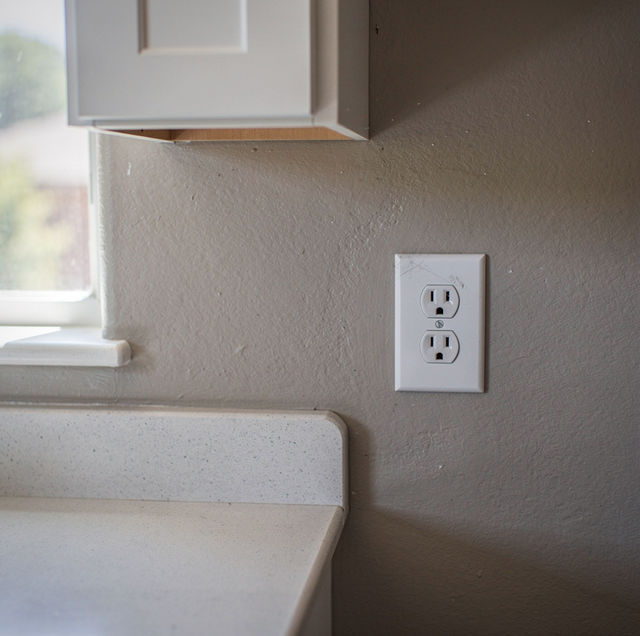
Flickering lights and a warm outlet can share a single cause. When a wire's connection at a terminal, a splice, or a socket loosens, current still crosses it, only through a smaller patch of contact. That narrow contact resists the flow, and resistance turns electrical energy into heat right at the joint. The same loose joint can also make and break contact for a fraction of a second as it heats, shifts, or vibrates, and each break shows up as a flicker in whatever the circuit feeds.
What separates a nuisance from an emergency is the pattern: where the flicker occurs, what sets it off, and whether heat, sound, or smell accompanies it. A bulb that flickers in one lamp is a small, contained fault. Lights that brighten and dim across every room at once, or an outlet that has turned hot and discolored, sit at the far end of the scale. Reading the pattern first tells you how fast to act and what kind of help fits.
Matching the Pattern to Its Cause
This table pairs each pattern with its likely source and the urgency of its attention, ordered from harmless at the top to urgent at the bottom.
| Pattern | Likely cause | How urgent |
|---|---|---|
| One fixture flickers while others on the circuit stay steady | A bulb backed out of its socket, a failing bulb, or a loose connection inside that fixture | Low if a snug, working bulb (fitted with the breaker off and the bulb cool) stops it; otherwise a repair visit |
| A dimmed LED flickers or strobes at low settings | A dimmer built for incandescent loads, or a non-dimmable bulb on a dimmer | Low; a nuisance rather than a hazard, solved by matching the control and the bulbs |
| Lights dip for a moment when a large appliance starts | The starting surge of a motor on a shared circuit or service | Low if brief; higher if the dip is deep, lingers, or comes with warmth at an outlet |
| Lights across the house brighten and dim | A problem at the service connection is one possibility | High; call promptly |
| An outlet or switch plate (not a dimmer) feels warm | A loose terminal, worn receptacle contacts, or a circuit carrying too much load | Moderate to high; stop using it until it is checked |
| A plug falls out of an outlet | Spring contacts inside the receptacle that have lost their grip | Moderate; replacement of the receptacle is the repair |
| Discoloration or a burning smell at an outlet | A connection that has been overheating | Urgent; stop using it and turn its breaker off |
A breaker directory that names the rooms and outlets each breaker feeds turns the urgent row of this table into a one-step response, where an unlabeled panel leaves a hot outlet energized while breakers get tried one at a time.
One Fixture or One Bulb
The mildest pattern stays in one place. A screw-base bulb touches the socket at two points, the threaded shell and the small contact at the center of the base, and cycles of heating and cooling can back a bulb out just far enough that the center contact loses firm pressure. That bulb can flicker when a door closes, or someone walks across the floor above. With the circuit's breaker off and the bulb cool, turning it snug settles that case. A known-good bulb that still flickers in this socket puts the fault in the fixture.
Dimmers add a second harmless cause. A dimmer designed for incandescent bulbs controls brightness by cutting part of each cycle of the current, and an LED bulb draws a small fraction of the power an incandescent did. At low settings, the LED may fail to follow the chopped supply and instead flickers or strobes rather than dimming smoothly. The fix is a matched pair: a dimmer rated for LED loads and bulbs marked as dimmable.
The pattern moves up the ladder when the flicker survives a good bulb and a matched control. Inside the fixture's box, the fixture leads are spliced to the house wiring with wire connectors, and a splice that has worked loose behaves as any loose joint does: it interrupts current and heats. Flicker when the fixture is touched, or while a ceiling fan on the same mount runs, fits that description. Reaching those splices means opening the fixture canopy and handling wiring, which is lighting repair work rather than a homeowner check.
Lights That Dip When a Motor Starts
A motor needs a current surge to start turning, larger than the current it draws once it is running. When a compressor, a vacuum, or a disposal starts, the surge pulls voltage down along the wiring it shares with the lights, and the lights blink before they recover. A dip that clears once the motor is up to speed is due to that starting surge.
The same event reads differently when the dip changes character. A dip that deepens over time, lasts past the start, blacks a light out completely, or arrives alongside a warm outlet or switch on that circuit suggests resistance somewhere along the shared path. A loose connection adds that resistance, so each start drops more voltage across the joint and heats it a little more. Dimming tied to heavy appliances, especially when several have been added, can also indicate a panel short on capacity, which is a question about the panel rather than this circuit.
Flicker Across the Whole House
When lights in several rooms, on different circuits, brighten and dim together, the cause sits upstream of any single circuit. A home's electrical service arrives as two supply legs that share a neutral conductor, and the neutral keeps the two halves of the house balanced. If the neutral connection at the service loosens or fails, the two halves no longer share voltage evenly: one side of the house can run bright while the other sags, and the balance swings each time a large load switches on or off. A problem at the service connection is one possibility for this pattern, not a diagnosis, and a loose connection at the main breaker is another.
Call promptly: an uneven supply can push excess voltage into electronics and appliances on one side, and a failing service connection can heat at a point that carries the whole home's load.
The service line up to the house and the meter itself can be the utility's equipment, while the meter socket and the wiring from it into the panel belong to the house. If neighbors on the same line see their lights swing at the same moments, the utility's side is more likely to be the location, and a report to the utility comes first. If their lights hold steady, the house-side connections need testing.
Warm Outlets and Switches
Heat at a receptacle or switch can start at a loose terminal. A receptacle holds each wire either under a side screw or in a push-in slot on the back, where a small spring clip grips the conductor. Years of heating and cooling can ease either grip, and a push-in slot has less contact area to lose. A weakened grip heats the device, and the cover plate is where that warmth shows.
The receptacle's own contacts are another source. The metal springs that grip a plug's blades lose tension after years of plugs being inserted and removed. A plug that sags or drops out under its own weight shows that loss, and current crossing the small remaining patch of metal heats the blades and contacts together.
Load is a third. A circuit asked to carry a heavy load for hours warms along its whole length, and every connection on it runs warmer too. An outlet that warms only when a heavy appliance runs and cools once it is unplugged is showing load; an outlet that stays warm with a light load, or runs warmer than its neighbors on the same circuit, is showing a connection problem.
A dimmer is different, since some warmth is expected. A dimmer turns part of the energy it controls into heat, so its faceplate can feel slightly warm with the lights on. A dimmer too hot to keep a hand on, or a plain on-off switch that turns warm under an ordinary lighting load, is a fault worth testing. A faint buzz or crackle from an outlet or switch belongs in the same category, since it can be current arcing across a loose connection. An outlet or switch that is hot, discolored, buzzing, or smells of burning means stop using it and turn its breaker off; cover plates stay on, and boxes stay closed.
An overheated receptacle or switch can shock or burn anyone who handles it, and the damage sits out of sight behind the plate; opening it, even with the breaker off, is an electrician's job.
What Electrical Testing and Outlet or Switch Replacement Involve
Electrical testing can start with the circuit live and the covers on. A plug-in tester checks each receptacle for reversed polarity and an open ground. Voltage is measured at outlets, with and without a load running, to identify the joint along the circuit where the voltage drops. A thermal camera can show a warm terminal through the plate before any discoloration appears.
The hands-on part comes after the breaker is off and the circuit is confirmed dead. The device comes out of the box, and the terminations are inspected for loose screws, push-in connections, and insulation darkened by heat. A worn receptacle is replaced with one rated for its circuit, and connections can be moved from push-in slots to the side screws. A switch or dimmer that runs hot is replaced with a dimmer matched to the LED load it controls. Loose splices inside fixture boxes are remade, and a breaker that no longer holds or trips correctly is repaired or replaced at the same rating. Swapping in a larger breaker is never the fix for a circuit that runs warm, since it lets more current through wire sized for less. Where heat has damaged the wiring along a run, that section is rewired.
Frequently Asked Questions
A breaker responds to the current flowing through the whole circuit and trips when that current exceeds its rating for long enough. A loose terminal can overheat while the circuit carries an ordinary load well inside that rating, so the breaker registers nothing wrong. Arc-fault breakers add a second sense: they read the electrical signature of arcing and can open the circuit on it, though a hot outlet still needs its connection repaired.
Newer tamper-resistant receptacles have spring-loaded shutters behind the slots that open only when both blades of a plug press in simultaneously. That design blocks a single object pushed into one slot, and it makes a plug harder to insert at first. The stiffness is normal.
Partly. A fluorescent fixture can flicker from the same loose socket or splice, but it also has its own wear parts. A tube nearing the end of its life can darken at the ends and flicker at start-up, and the ballast regulating current to the tube can fail, causing flicker or a hum. A fresh tube, with the fixture's breaker off, separates the two: if the new tube still flickers, the ballast or the wiring is at fault.
A space heater draws a heavy, continuous load, so a plug that feels slightly warm after long use can be ordinary. A plug too hot to hold, darkened blades, or a cord jacket that has softened near the plug indicate heat beyond ordinary use, at the plug or at the receptacle behind it.
No. Reaching a terminal screw means pulling the device from a box that holds live conductors whenever the breaker is on, and that work belongs to an electrician. Tightening alone also leaves damage behind: an overheated wire end oxidizes and can become brittle, so the repair cuts the conductor back to clean, bright metal before it is connected to a new device.
Yes. The small driver circuit in an LED bulb's base can fail, causing flicker even without a dimmer. Separately, an illuminated switch or certain smart switches can pass a trickle of current through the bulb even when switched off, which can cause an LED to glow faintly or flash in a dark room.
Hire a crew for electrical testing and outlet or switch repair — circuit testing, outlet and switch replacement, lighting repair and circuit breaker repair, with interior rewiring where heat has damaged a run. Clover Valley Home Service serves Greater Sacramento, Placer, and El Dorado counties. CSLB #1003154. Call (916) 742-3141.