Pulling out a section of moldy drywall feels like progress, but it solves nothing if the water feeding that mold is still getting in. A remediation job is built around that one fact: mold cannot be treated as a standalone problem, because it is downstream of moisture, and any step that skips ahead to cleanup before the source and the extent of the water are known ends up redone. Sometimes the first clue is a musty smell in a single room, not visible growth at all. In other cases, the trigger is a stain, a soft spot, or another sign of water that has been sitting behind a wall or under flooring long enough to feed growth. Either way, the sequence below shows what a remediation project goes through in order, and why moving a step out of place undoes the ones around it.
The table pairs each stage with what a crew does on-site and the reason it must occur before the next one starts.
| Step | What Happens | Why It Matters |
|---|---|---|
| Inspection and moisture mapping | A technician tests suspect materials and records how far the moisture extends | Sets the containment boundary and tells the crew what's wet, not just what looks stained |
| Containment and negative air | The work zone is sealed with plastic sheeting and put under negative pressure | Keeps spores from migrating into the rest of the house while material is disturbed |
| Removal of porous materials | Drywall, insulation, carpet, and other absorbent materials with growth are cut out and bagged | Mold grows into porous material, not just on it, so cleaning can't reach what's inside |
| Cleaning non-porous surfaces | Studs, concrete, tile, and solid surfaces are scrubbed and treated | Mold sits on these surfaces rather than inside them, so they can be salvaged instead of replaced |
| Drying and dehumidification | Air movers and a dehumidifier run until moisture readings normalize | Any material closed up while still damp gives the next growth cycle a head start |
| Verification | Readings and a visual check confirm the area is dry and clean | Confirms the job is finished instead of just looking finished |
| Rebuild | New insulation, drywall, texture, and finish go back in | Closing the space too early hides a problem that can't be caught again until it resurfaces |
Mapping the Moisture Before Anything Else Moves
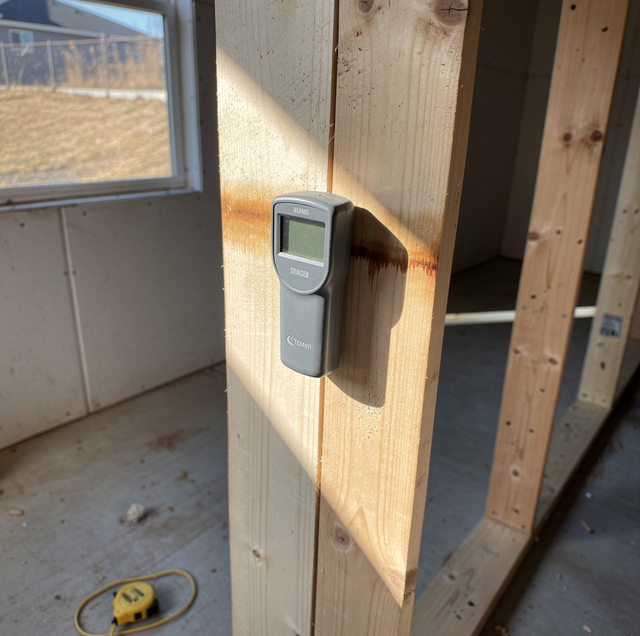
Before anyone removes a single piece of drywall, the extent of the water has to be known. A technician uses a moisture meter to test the suspected area and the surrounding materials, building a picture of how far the dampness has traveled rather than just where a stain is visible. Water moves along framing and behind finishes in directions that don't match what's visible on the surface, so a visual check alone can understate the actual footprint.
This step also sets the containment line for everything that follows. Cutting the work zone too small can force the crew to re-open containment mid-project, or leave damp material outside it; drawing it too large means removing and rebuilding sound material that never needed to come out. Getting the boundary right the first time is what keeps the rest of the sequence from doubling back on itself.
Sealing Off the Area and Pulling the Air Negative
Once the boundary is set, the crew seals the work zone with plastic sheeting, taping off doorways, vents, and any gaps that would allow air to pass freely between the containment and the rest of the house. A negative air machine, fitted with filtration designed to capture mold spores, pulls air out of the sealed zone faster than it can leak back in, lowering the air pressure inside just below that of the surrounding rooms.
Don't scrub, dry-brush, or pull out moldy material yourself before this step is in place. Disturbing it without containment pushes spores into the HVAC system and nearby rooms. A crew keeps the zone sealed, and the air pulled negative first.
That pressure difference is what protects the rest of the house: air only moves from a higher-pressure area to a lower-pressure one, so as long as the containment stays negative relative to everywhere else, dust and spores stirred up by demolition inside the zone get pulled toward the filter instead of drifting out through a doorway or a gap around a vent.
Removing the Materials That Can't Be Cleaned
With containment holding, the crew starts pulling out the materials that absorbed water and supported growth: drywall, batt insulation, carpet and pad, and any wood that's soft enough for mold to have worked into the fibers rather than sitting on the surface. Porous materials aren't cleaned because mold doesn't stay on top of them the way it does on a hard surface; it grows down into the paper facing of drywall or the cellulose in insulation, and a wipe-down only removes what's on the visible face.
Removal extends a margin beyond the last visible sign of growth or moisture, because a material can carry mold or dampness slightly past where either is obvious to the eye. Everything that comes out stays inside containment and is bagged there before leaving, so spore-laden material leaves the work zone sealed in bags rather than loose.
Cleaning the Surfaces That Can Be Saved
Not everything in a mold-affected room needs to be torn out. Studs, concrete slabs, tile, and other non-porous or semi-porous surfaces can be cleaned rather than replaced because growth on these materials remains on the surface rather than penetrating them. The crew scrubs affected surfaces, applies an antimicrobial treatment to the material, and follows with HEPA vacuuming to lift settled spores and fine debris that a brush alone would leave behind.
This is also the point where framing gets a close look. A stud can appear structurally fine while still reading wet, and treating the surface without addressing the moisture underneath is how growth returns to a spot that already got cleaned once.
Drying the Structure Until the Numbers Say So
After removal and cleaning, air movers and a dehumidifier run inside the containment to bring the remaining materials back down to a normal moisture range. This step doesn't run on a fixed schedule; it runs until moisture readings on the exposed framing and subfloor drop to a level consistent with dry, unaffected material elsewhere in the house. Framing lumber holds water deeper in its grain than the paper facing on drywall does, so a stud can still be reading wet after the surrounding surfaces already feel dry to the touch.
A dehumidifier pulls moisture out of the air, while air movers keep that drier air moving across wet surfaces so evaporation doesn't stall in a corner. Running only one of the two slows drying and leaves damp pockets behind.
Skipping ahead of this step is how a remediation job can fail after the fact. Material that looks and feels dry on the surface can still retain enough moisture to support new growth once it's sealed behind fresh drywall, where nobody will see it again until the smell or the stain comes back.
Verifying the Work Before Anyone Calls It Done
Before containment comes down, the work gets checked against measurements rather than taken on the technician's word. That includes a visual inspection of the cleaned and treated surfaces, confirmation that moisture readings across the treated area have leveled off, and a general accounting that everything the inspection flagged has been addressed. On larger or more involved jobs, that check is sometimes performed by someone other than the crew that did the work, specifically so the final call on whether the space is clean and dry doesn't rest with the same people who did the removal.
Only after verification passes does containment come down. Breaking the seal early, even to speed up the rebuild, reopens the path for any spores still settling inside the zone to reach the rest of the house.
Rebuilding Only After the Space Is Confirmed Dry
The last stage puts the room back together: new insulation, drywall, texture, paint, and flooring, matched to what came out. Rebuilding is deliberately the final step and not something that overlaps with drying or cleaning, because every material that goes back in creates a surface that hides what's behind it. Framing that's still slightly damp when it gets closed up behind new drywall sets up the exact dark, enclosed, moisture-holding conditions that started the problem in the first place, and this time nobody will see it again until it's spread far enough to smell or stain through the new finish. Waiting for verification before this step is what keeps a remediation job from quietly repeating itself later.
Frequently Asked Questions
No, as long as the containment holds. Containment and negative air are built so the rest of the home stays livable while the sealed zone is worked in; the pressure difference is what keeps spores from crossing into rooms you're using. A room that shares a direct HVAC return with the work zone is the one exception worth flagging to the crew, since that return can pull air from the sealed area, which is why the system serving the zone stays off or has its vents sealed until verification passes.
Contents follow the same porous-versus-solid split as the building. Glass, metal, and sealed plastic items are cleaned inside the containment and carried out once they are wiped down. Upholstered furniture, mattresses, cardboard boxes and loose paper with growth on them are bagged and discarded, since they hold growth the same way drywall does.
Water damage drying addresses the moisture: pulling water out and drying materials fast enough to cut short the damp time mold needs to take hold. Remediation starts with the assumption that mold has already taken hold, which adds containment, targeted removal of colonized material, and antimicrobial treatment to the drying step. A leak dried out within the first day or two can stay a drying job; one that has been feeding a damp cavity for longer can need both.
Containment protects the rest of the house, not the people working inside the zone, where the spore and dust loads are highest as material comes out. Crews wear respirators, disposable coveralls, gloves, and eye protection, and they remove the coveralls in a sealed entry chamber built into the containment, so nothing on their clothing leaves the work area.
Leave any chemical treatment to the crew. Bleach mixed with certain other household cleaners, including anything containing ammonia, produces a toxic gas, and bleach itself does little against mold growing inside a porous material since it doesn't reach below the surface. If you're waiting on service, the safest move is to avoid disturbing the area rather than trying to pretreat it.
Yes. Disturbed mold releases spores into the air even inside a well-run containment, and anyone with asthma, allergies, or a compromised immune system should avoid the work zone and, where possible, the rooms immediately next to it until the job is verified complete.
Bring in a mold remediation crew — moisture mapping, sealed containment under negative air, removal of colonized material, and a dry reading confirmed at the end of the job. Clover Valley Home Service serves Greater Sacramento, Placer, and El Dorado counties. CSLB #1003154. Call (916) 742-3141.