
Bathroom Fan Not Clearing Steam? 7 Fixes That Work
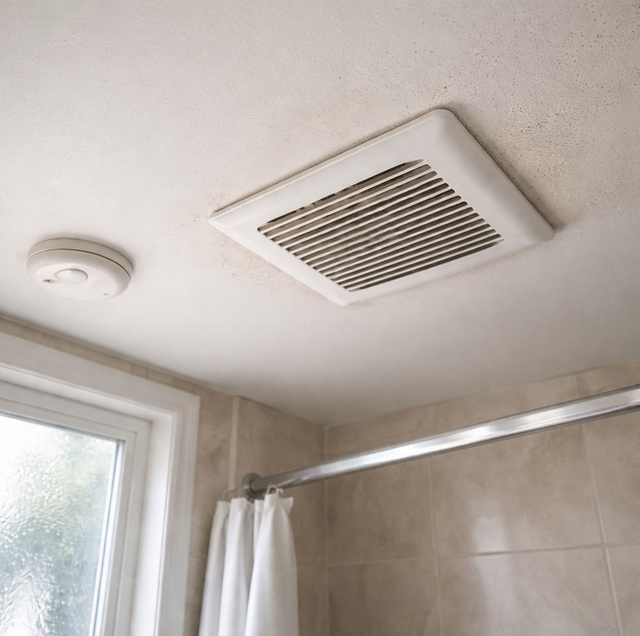
Quick Answer: A bathroom fan fails to clear moisture when it moves too little air (undersized for the room, clogged with dust, or fighting a crushed or over-long duct) or when it vents somewhere other than outdoors. Clean the grille and blades, confirm the duct runs to an exterior cap, and size the fan to the room. If air still lingers, the fan or its ducting likely needs replacing.
The fan hums, the mirror still fogs, and beads of water sit on the walls twenty minutes after you towel off. A bathroom exhaust fan has one job: pull humid air out of the room and push it outside before that moisture soaks into paint, drywall, and framing. When it stops doing that, the problem is almost always one of two things. Either the fan is moving too little air, or it is moving air to the wrong place.
How A Fan Is Supposed To Move Moisture
Airflow through a bathroom fan is rated in CFM, or cubic feet per minute. It tells you how much air the fan can pull in a minute of running. Move enough air often enough and the humid air leaves faster than a hot shower can produce it. Move too little and the moisture wins.
A common sizing guideline is roughly one CFM per square foot of floor space, so a 50-square-foot bathroom wants a fan rated near 50 CFM, and a 100-square-foot bathroom wants closer to 100. Larger rooms, or rooms with a separate shower stall or a jetted tub, are usually bumped up from there. A fan sized well below the room will run and run without ever catching up.
CFM only matters if the air has somewhere to go. Every working bathroom fan connects to a duct that carries the moist air to an exterior cap, either through the roof or out through a sidewall. That path has to be clear, reasonably short, and sealed to the outside. A powerful fan tied to a blocked or misrouted duct is no better than a weak one. The two questions to answer first are always the same: is the fan moving enough air, and is that air actually reaching the outdoors?
Why The Fan Runs But The Room Stays Damp
Once you know the fan needs both airflow and a clear path outside, the usual failure points sort themselves into a short list.
The Fan Is Too Small For The Room: A builder-grade fan sized for a powder room can end up in a full bath with a walk-in shower. It spins, it makes noise, and it never keeps up with the steam. Check the CFM rating printed on the housing or in the manual against the room's square footage. If the number falls well short of the room size, no amount of cleaning will fix it. The fan is under-spec for the space.
Dust Has Clogged The Grille And Blades: A fan pulls lint, hair, and dust in along with the air, and over months that film coats the grille louvers and the blades. A caked blade is heavier and pushes air poorly, and a clogged grille chokes the intake. Fans that once cleared a mirror in minutes can lose a large share of their airflow to buildup alone. This is the most common fixable cause, and the one homeowners can usually handle themselves.
The Duct Is Crushed, Kinked, Or Full Of Lint: Flexible ducting sags, and where it sags it kinks. Insulation piled in an attic can crush a run flat. A duct that is too long, or that loops up and over obstacles, adds resistance the fan cannot overcome. Flexible duct also traps lint along its ribbed interior over time. Any of this throttle airflow before it ever reaches the outside cap.
The Duct Dumps Into The Attic: This is the failure that does real damage. Some fans were never connected to an exterior cap at all, so they blow warm, wet air straight into the attic. The moisture condenses on cold sheathing and rafters, and over seasons it feeds mold and rots the wood. A fan must always vent to the outdoors through a roof or wall cap, never into the attic, and never into a soffit vent that can pull the damp air right back into the eaves. If you find a duct that ends in the attic, treat it as urgent.
The Backdraft Damper Is Stuck: Exterior caps and many fan housings include a small flap, the backdraft damper, that opens to let air out and closes to keep outside air, pests, and cold drafts from coming in. Paint, debris, or a warped hinge can freeze that flap shut. The fan then pushes against a closed door, and almost nothing leaves the room.
The Fan Never Runs Long Enough: Steam keeps rising off warm, wet surfaces well after the water stops. A fan switched off the moment you step out leaves most of that moisture behind. Running the fan for about twenty minutes after a shower gives it time to clear the lingering humidity. A wall timer or a humidity-sensing switch handles this automatically so it does not depend on memory.
The Motor Is Simply Worn Out: Motors wear. Bearings dry out, the wheel slows, and a fan that sounds fine can be turning too slowly to move its rated air. A grinding, rattling, or wheezing note, or a fan far quieter than it used to be, points to a motor on its way out. At that point, replacement is the fix.
The Fixes, From Simple To Involved
Work the list in order. The cheap, homeowner-safe steps come first, and they solve a surprising share of cases.
Clean the grille and blades: Cut off the power, pull the grille (most unclip or unscrew), vacuum it, and wash it. Vacuum the visible blades and wipe them down. This alone restores a fan that has been slowly choking on its own dust.
Cut power to the fan at the breaker before pulling the grille to clean it. The fan is wired into the ceiling, and the shock hazard stays real even with the wall switch off. Any replacement that involves the ceiling wiring, or a home with old or aluminum wiring on the circuit, calls for a licensed pro rather than a guess.
Confirm the duct runs to an exterior cap: From outside, run the fan and check the roof or wall cap for airflow. A tissue held near it should flutter. No airflow outside, despite a running fan, points to a disconnected duct, a duct dumping into the attic, or a stuck damper. Free a stuck backdraft flap, and it should swing open with a light touch.
Shorten, straighten, and insulate the duct: A duct run should be as short and direct as the layout allows, with sagging sections supported so they cannot kink. In an attic, insulating the duct or using insulated ducting cuts the condensation that otherwise drips back down the run.
Replace an undersized or failed fan: If the CFM is too low for the room, or the motor is worn, a new fan sized to the space is the real fix. Modern units run quieter and move more air than the builder-grade models they replace.
Add a timer or humidity switch: Swapping the wall switch for a timer or a humidity-sensing control keeps the fan running long enough after each shower without anyone having to remember.
Run the fan for about twenty minutes after each shower so it can clear the humidity that keeps rising off warm, wet surfaces. A wall timer or a humidity-sensing switch does this automatically instead of depending on memory.
Think of a bathroom fan like a straw in a thick milkshake: the pump can be strong, but if the straw is pinched, crusted inside, or dropped into an empty glass, almost nothing moves. Airflow and a clear path to the outside matter every bit as much as the fan's rating.
When It Is A Job For A Pro
Cleaning a grille and checking an exterior cap for airflow are safe weekend tasks. The work behind the ceiling is not. Rerouting or reconnecting duct means crawling into an attic, where there are fall risks between joists and irritating insulation dust, and where a wet duct may have already started mold or rot that needs proper handling. Any fan replacement that involves the ceiling wiring, and any home with old or aluminum wiring in the circuit, calls for a licensed pro rather than a guess. A fan is a small appliance, but it sits inside your ceiling, your roof, and your electrical system all at once, and getting the venting right is what keeps moisture out of the structure for good.
Moisture that never leaves does not stay a fan problem for long. It becomes peeling paint, spotted grout, a musty smell, and, where a duct vents into the attic, hidden mold and softened framing overhead. Fixing the airflow and the vent path early is far cheaper than the repairs that follow a bathroom that never fully dries.
Frequently Asked Questions
Hold a single square of toilet paper flat against the grille with the fan running. If suction holds it in place on its own, the fan is drawing air. If it drops, the fan is spinning without moving much, which usually points to a clogged grille, a blocked duct, or a tired motor rather than a wiring fault.
Only up to a point, and only if the duct can carry the extra air. Oversizing the fan without enlarging an undersized or restricted duct just makes the fan louder while the airflow bottlenecks in the ductwork. A fan rated well above the duct's capacity also risks depressurizing a tight room and pulling air backward down a nearby vent.
No. The moist air has to reach true outdoors, through a roof or sidewall cap. Dumping it into a garage, crawl space, or between-floor cavity just relocates the condensation and the mold risk to another hidden part of the house. Those enclosed spaces trap humidity the same way an attic does.
Most fans up to about 100 CFM are built for a 4-inch duct, and larger fans often step up to 6 inches. Necking a 4-inch fan down to a 3-inch duct, which sometimes happens when connecting to an existing run, sharply cuts airflow. Matching the duct diameter to the port on the fan housing keeps the rated CFM intact.
Glass fogs because its surface is colder than the surrounding air, so moisture condenses there first even when overall humidity is dropping. A fan cannot warm the mirror. A quick clear of the room air with a fog-free mirror or a small amount of heat at the glass addresses the mirror, while the fan handles the room.
Cleaning the grille and blades once or twice a year keeps airflow near full. The duct itself needs attention less often, but any run that has gone years untouched, or that serves a heavily used bathroom, is worth inspecting for lint buildup, since a ribbed flexible duct collects it faster than smooth pipe.
Book a fan and vent inspection before hidden moisture turns into damage — get airflow and ducting checked by a licensed team. Clover Valley Home Service serves Rocklin, Roseville, and the Sacramento area. CSLB #1003154. Call (916) 742-3141.
