
Vinyl Plank vs Laminate: Which Survives Water?
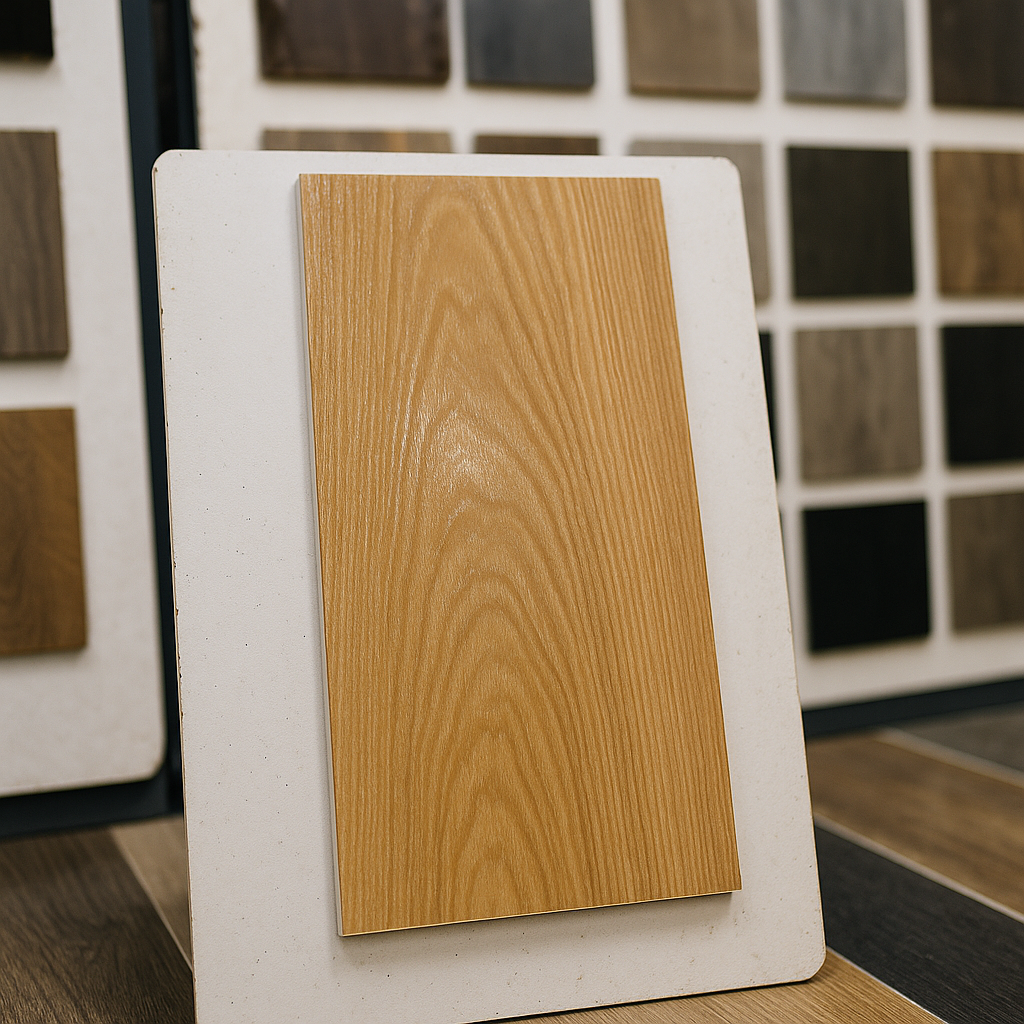
Quick Answer: Luxury vinyl plank is waterproof because the plank itself is plastic, so spills, standing water, and humidity do not swell it. Laminate has a wood-based fiberboard core that swells and comes apart once water reaches the seams, so it is water-resistant at best. For bathrooms, kitchens, laundries, and basements, vinyl plank is the safer choice. Where a floor stays dry and you want the crispest wood look and a firmer feel, laminate still competes.
You are standing in a flooring showroom holding two planks that look nearly identical. Both show convincing wood grain. Both click together the same way. Both get sold as durable, family-friendly floors. Then someone asks the question that actually decides most kitchens, bathrooms, and laundry rooms: which one handles water? That is where these two products stop being cousins and become opposites, and it comes down entirely to what lies beneath the printed surface.
What Each Floor Is Actually Made Of
The answer to moisture lives in the core, so start there.
Luxury vinyl plank, usually sold as LVP, is plastic through and through. The main body of the plank is polyvinyl chloride (PVC). Rigid-core versions come in two common builds: SPC (stone-plastic composite), which blends PVC with powdered limestone for a dense, hard, dimensionally stable board, and WPC (wood-plastic composite), which uses a foamed core that feels a touch softer and warmer underfoot. On top sits a printed photographic film that carries the wood or tile image, and above that a clear wear layer that takes the daily abuse. The point that matters: there is no wood in the structural core. Water has nothing to soak into and nothing to swell.
Laminate is built on a different bone. Under its printed photo layer and wear layer is a core of high-density fiberboard (HDF), made from compressed wood fibers and resin. HDF is dense and stiff, and it holds a click profile well, but it is still a wood-based material. Wood fiber drinks water. When moisture gets into an HDF core through a seam or an unsealed edge, the fibers swell, the plank edges puff up and chip, and the printed layer can lift away from the core. That damage does not reverse when the floor dries. The swollen edge stays swollen.
That single structural difference is the whole ballgame for moisture, and it is why the two products get recommended for such different rooms.
Waterproof vs Water-Resistant: The Distinction That Matters
These two words get used loosely, so pin them down.
Waterproof, as it applies to LVP, means the plank material itself will not be damaged by water. Leave a puddle on a rigid-core vinyl floor overnight, and the plank underneath is unchanged. Spills, mopping, tracked-in slush, and bathroom humidity are non-events for the board. This is why LVP has become the default for wet and damp rooms.
Water-resistant is a weaker promise. Standard laminate is water-resistant at best, meaning it can shrug off a spill you wipe up promptly but not water that sits or seeps. Many newer laminates are now marketed as water-resistant "for up to 24 hours" or "up to 72 hours," and some carry a splash-proof surface treatment. Treat those numbers as the manufacturer's claim under their own test conditions, not a guarantee for your kitchen. The clock in those claims usually assumes water sitting on the surface, not water wicking up under a plank from a slow dishwasher leak. Once liquid reaches the raw core edge, the water-resistant rating stops protecting you.
Here is the honest nuance even for LVP: the plank is waterproof, but your floor system is not a sealed tub. Water can still travel through the click seams and pool on the subfloor beneath. The vinyl will not care, but a subfloor left wet under any floor can grow mold or telegraph problems upward. So with LVP, a spill is forgiving, yet a real leak still needs the water found and the area dried. Waterproof describes the plank, not a license to ignore standing water.
Feel, Sound, and Look Underfoot
Moisture is one driver. How the floor feels and reads is the other half of the decision.
Laminate tends to feel harder and more like real wood underfoot because that dense HDF core is rigid. Some people prefer that solid, reassuring firmness. It also often has crisper embossing, in which the surface texture is pressed to align with the printed grain, so a good laminate can look convincingly like sawn oak in raking light.
LVP feels softer, warmer, and quieter. The plastic core has a little give, so it is more forgiving to stand on for a long stretch at the sink and gentler on a dropped glass or a child's knees. WPC cores in particular feel cushioned. High-end LVP with deep embossing and varied plank tones now looks extremely realistic too, closing much of the appearance gap that used to favor laminate.
Think of it like the difference between a hardwood cutting board and a quality composite one. The wood board (laminate) is firmer, handsome, and does its job beautifully as long as you do not leave it sitting in the sink. The composite (LVP) is a little softer and quieter, and it does not mind being left wet. Neither is wrong. They just tolerate water differently.
Durability, Ratings, and How to Judge Quality
Both floors resist scratches and dents well, but they are measured on different scales, and knowing the scale keeps a salesperson honest.
For LVP, the most important factor is wear-layer thickness, measured in mils (thousandths of an inch). A 6 mil wear layer suits a light-traffic bedroom. A 12 to 20 mil or thicker wear layer is what you want for a busy kitchen, an entry, or a home with dogs. The wear layer is the clear top film, and a thicker one resists scratches and scuffs longer. Two vinyl planks can look identical and perform very differently based on this one spec.
For laminate, quality is graded by an AC rating (Abrasion Class), typically ranging from AC1 to AC5. AC1 and AC2 are light residential grades. AC3 handles normal household traffic. AC4 and AC5 move into heavy residential and commercial use. Laminate's hard surface actually resists surface scratching very well, sometimes better than mid-grade vinyl, because that melamine wear layer is tough. Its weakness was never the top. It is the edges and the core once water gets involved.
| Factor | Luxury Vinyl Plank (LVP) | Laminate |
|---|---|---|
| Waterproof? | Yes, the plank is plastic and unaffected by water | No, water-resistant at best; core swells if water reaches it |
| Core | PVC-based rigid core (SPC or WPC) | HDF, wood-fiber and resin |
| Feel underfoot | Softer, warmer, quieter, more forgiving | Firmer, more like real wood |
| Best rooms | Bathrooms, kitchens, laundry, basements, slab | Dry living areas, bedrooms, hallways, offices |
| Scratch/wear spec | Wear layer in mils (6 to 20+) | AC rating (AC1 to AC5) |
| Install | Floating click-lock over a flat subfloor | Floating click-lock over a flat subfloor |
Installation, Slabs, and Subfloor Movement
Both of these are floating floors. The planks click edge to edge and rest on the subfloor rather than being glued or nailed down, which is why they can go over an existing hard surface with the right prep. Both demand a flat subfloor, because a floating floor bridges dips and can flex or click at a high spot. Both usually want an underlayment or a pad, and many rigid-core LVP planks come with the pad already attached.
Subfloor moisture is where they part ways again. Concrete slabs release water vapor for the life of the slab, and many local homes sit on slab-on-grade over expansive clay soil that swells when wet and shrinks when dry. That movement and that steady vapor are hard on a wood-based core. LVP's plastic core does not care about slab vapor and tolerates the minor seasonal shifting of an expansive-soil subfloor better than an HDF core does. Put laminate over a damp slab, and you are betting on the vapor barrier and the seams holding for years, which is a bet many homeowners lose. This is a big reason LVP is so often specified for ground-floor and basement installs on grade.
Repair and Replacement
Neither floating floor is glued, which helps when a plank gets ruined.
If a single plank is gouged, burned, or swollen, both LVP and laminate can, in principle, be repaired by disassembling the floor back to the damaged board, swapping it, and clicking everything back. In practice, that means unclipping each row from the nearest wall to the damaged plank, so a board in the middle of a room is more work than one near an edge. This is the strongest argument for buying and storing a spare box at install time, because the exact color and lot can be discontinued later, and a mismatched plank stands out. With laminate, if water has already swollen several planks, they cannot be salvaged and dried flat; those boards get replaced. With LVP, an isolated damaged plank is usually a cosmetic swap, since water was not the cause.
Frequently Asked Questions
It is not the smart choice, even with a water-resistant laminate. Bathrooms combine standing humidity, splashes at the tub and sink, and the occasional overflow, and basements add slab vapor from below. A water-resistant rating covers a wiped-up surface spill, not water wicking into the core from the subfloor or sitting along a toilet base. In those rooms, the failure point is the seams and edges, exactly where bathroom and basement water tends to reach. LVP removes that risk because there is no wood core to protect.
It means the plank material itself is immune to water damage, so the board will not swell, warp, or delaminate, no matter how long it stays wet. The limit is that the floor is assembled from separate planks with click seams, so water can pass through those seams and pool on the subfloor underneath. The vinyl is fine, but trapped water below still needs to be found and dried, or you can get mold and odor under an otherwise perfect-looking floor. Waterproof describes the plank, not the whole assembly.
LVP generally feels softer, warmer, and quieter, while laminate feels firmer and more like solid wood. If you like laminate's look but want it quieter and slightly softer, a quality acoustic underlayment helps, cutting the hollow click and taking a little harshness out of each step. Underlayment also evens out minor subfloor imperfections. It will not make laminate feel like plush vinyl, but it meaningfully narrows the gap in sound and comfort.
Look at the right spec for each product. For LVP, check the wear-layer thickness in mils; aim for 12 mil or more in kitchens, entries, and pet households, and treat anything at 6 mil as bedroom-only. For laminate, check the AC rating: AC3 for normal home use and AC4 or AC5 for heavy traffic. Also check the total plank thickness and, for LVP, whether it is SPC (denser, more stable) or WPC (softer, warmer). Those numbers tell you far more than words like "premium" on the box.
LVP, clearly. A concrete slab emits water vapor throughout its life, and homes on expansive clay see the ground swell and shrink with moisture, nudging the subfloor over the seasons. A wood-based HDF laminate core reacts badly to both, swelling with vapor and stressing at the seams as the slab moves. LVP's plastic core is dimensionally stable against vapor and shrugs off the minor movement, which is why it is the common pick for ground-floor and on-grade rooms. If you insist on laminate over a slab, a tested vapor barrier is not optional.
Yes, because both float rather than glue down. You unclip the rows from the nearest wall to the damaged plank, replace that board, and click the floor back together, which is easier near a wall than in the middle of a room. The catch is matching the replacement, since colors and lots get discontinued, so keep a spare box from the original install. One difference: swollen, water-damaged laminate planks cannot be dried and reused and must be replaced, while a damaged LVP plank is usually a clean cosmetic swap.
Book a free in-home flooring consultation — see samples in your own light and get an honest room-by-room recommendation. Clover Valley Home Service serves Greater Sacramento, Placer, and El Dorado counties. CSLB #1003154. Call (916) 742-3141.
