
When to Repair Flooring vs Replace It Entirely
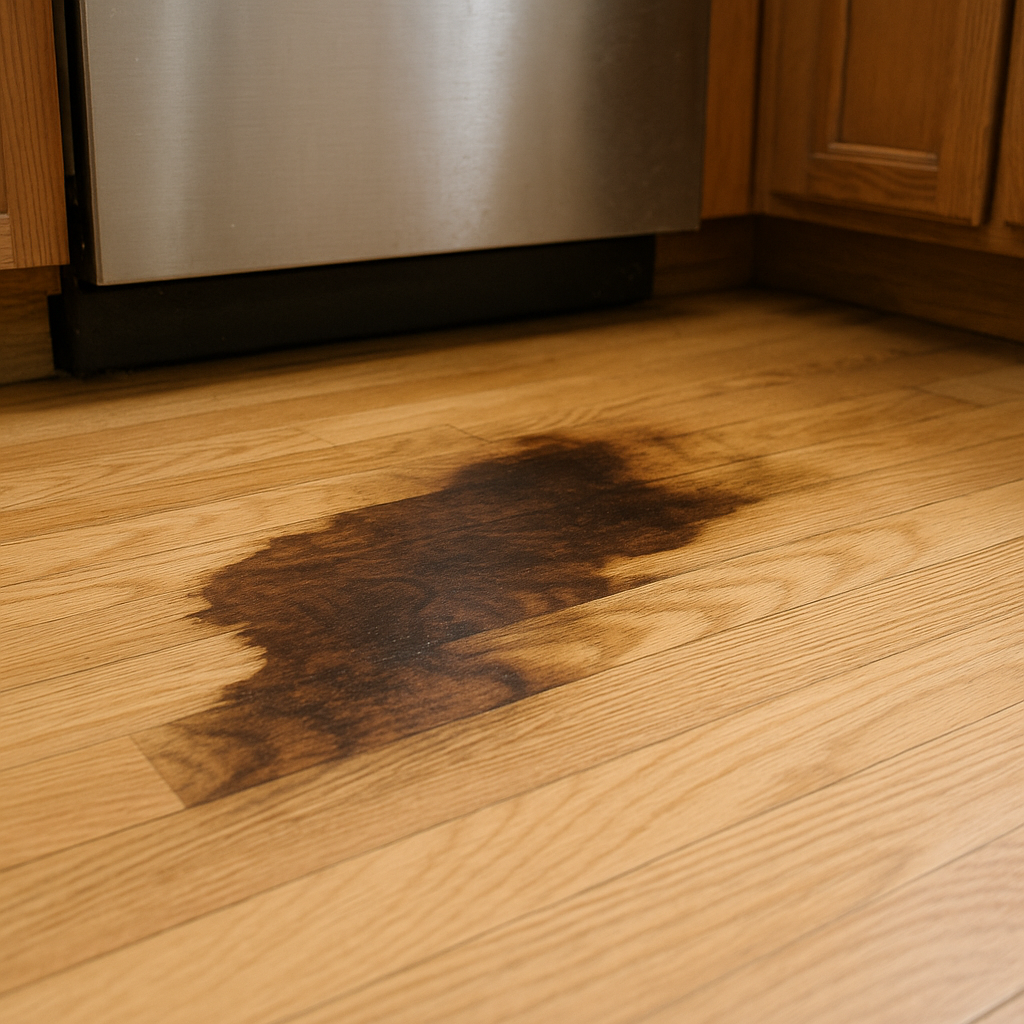
You are standing over a stretch of floor that has seen better days, a water stain spreading near the dishwasher, a few gouged boards by the door, and a soft spot that gives a little underfoot. The question is whether you patch the problem or tear it all out and start over, and the honest answer depends less on how it looks and more on what is happening underneath.
Repair and replacement each have their right time. Spend on a full replacement when a repair would have done, and you overpaid; patch a floor that needed replacing, and you paid twice. Knowing which situation you have is the whole game.
What You're Really Judging
The surface you see is only half the floor. Below it is the subfloor, the structural layer that everything rests on, and the condition of that layer decides more than the scratches on top. A floor with cosmetic damage over a sound subfloor is usually a repair. A floor where moisture, movement, or age has reached the subfloor or spread across the whole space is usually a replacement. So the real question is not "how bad does it look," it is "how deep and how widespread is the damage."
When a Repair Makes Sense
Repair is the right call when the damage is limited and the floor is otherwise healthy. A few scratched or dented boards, a small stained or chipped section, a cracked tile or two, or a localized problem in one area can typically be fixed by replacing the affected pieces or, with hardwood, sanding and refinishing. Hardwood has repair life built in: solid hardwood can usually be sanded and refinished around four to six times over its life to erase surface wear rather than being replaced, while engineered wood tolerates far fewer passes, depending on the thickness of its wear layer. A refreshed or new floor is also one of the upgrades buyers notice, so the choice carries a resale angle as well as a comfort one.
The key conditions are that the subfloor is dry and solid, the damage is confined to a small area, and the flooring type and style are still available to match. When those hold, a repair restores the floor at a fraction of the disruption and keeps the rest of a perfectly good floor in service.
When Replacement Is the Smarter Call
Replacement becomes the better choice when the damage is widespread, structural, or moisture-driven. Damage spanning multiple rooms or a large share of a room usually costs more to patch piece by piece than to replace cleanly, and the patches rarely blend well. Warping, cupping, buckling, or boards that have lost their shape point to a problem the surface cannot hide. And soft spots or sponginess underfoot mean the subfloor itself may be compromised, which no amount of surface repair can fix.
Moisture is the big one. When water has gotten under the flooring and into the subfloor, repairing only the visible layer traps the problem, and mold or rot continues underneath. Widespread water damage almost always means pulling the floor to dry, treat, or replace the subfloor, then laying new flooring. Age matters too: a floor near the end of its service life, or hardwood that has already been refinished as many times as it can take, is usually money better spent on replacement than on one more repair.
| Lean toward repair when… | Lean toward replacement when… |
|---|---|
| Damage is small and localized | Damage spans multiple rooms |
| Subfloor is dry and solid | Subfloor is soft, wet, or compromised |
| Boards are scratched or dented, not warped | Boards are warped, cupped, or buckled |
| Flooring can still be matched | Style is discontinued or heavily worn |
| Hardwood can still be refinished | Hardwood is at its refinishing limit |
A Note on the Local Climate
Dry heat and big seasonal swings put their own stress on flooring, especially wood. Long, hot, dry stretches pull moisture from wood floors and can cause boards to shrink, gap, and cup, while seasonal humidity changes make them move. That movement is usually a maintenance and acclimation issue rather than a reason to replace, but it does mean a floor here needs to be installed with the right expansion allowance and humidity in mind. When you are weighing repair against replacement, factor in whether the damage is seasonal movement that will settle or true structural failure that will not.
Frequently Asked Questions
The clearest signs are soft or spongy spots that give underfoot, a floor that feels uneven or bouncy, and any history of water intrusion in that area. A musty smell or visible staining that has spread beyond the surface also points to the subfloor. Since the subfloor is hidden, a section usually has to be opened up to confirm, which is part of why moisture damage tends toward replacement.
Cupping shows as board edges rising higher than the centers, which usually means moisture came up from below, and the plank is still structurally fine once it dries and re-acclimates. Crowning, where the center sits higher than the edges, and a floor that lifts or bulges in a line often mean the subfloor itself absorbed water and swelled. A moisture meter reading well above the surrounding boards, or a screw that sinks with no resistance when driven into the subfloor, confirms the base got wet and needs opening up rather than a surface patch.
Push an awl or a screwdriver into the subfloor at the soft spot, ideally from below in a crawlspace or through a removed floor register. Sound plywood or OSB resists the tip, and the wood stays firm; rotted subfloor lets the point sink in with almost no push, and the fibers crumble or feel spongy. A wider soft area that extends across a span, rather than a single punky patch, usually points to a failed joist or a subfloor delaminating along its plies, which is a structural repair rather than a surface one.
Look at the wear layer, the wood above the tongue-and-groove joint. Pull a floor register or a threshold to see a board's cross-section, or measure at a doorway edge. Solid hardwood usually starts around three-quarters of an inch, with a wear layer down to the tongue that allows several sandings, since each pass removes roughly a thirty-second of an inch. Engineered flooring is the tighter case: only the top veneer can be sanded, and a thin two-millimeter veneer often allows one light refinish at most, while a thicker four-to-six-millimeter veneer can take two or more. If the tongue is already exposed or the top of a nail head shows, the floor is at its limit.
On hardwood, the trick is to feather the repair in rather than drop a square of new boards into a rectangle. Installers weave replacement boards into the existing rows at staggered lengths so no seam runs straight across, then sand and refinish the whole room, not just the patch, so the stain and sheen carry through. Reclaimed boards pulled from a closet or under an appliance often match an aged floor better than anything new. On tile and vinyl plank, blending is harder because color lots shift, so a repair usually looks best when spare pieces from the original installation were saved.
An isolated soft spot usually traces to a single nearby water source: a slow supply-line drip behind a dishwasher or fridge, a leaking toilet flange, or an exterior wall that wicks in rain. Because the leak is local, the damage often stops at the framing bay where it occurs, so opening that one section can show whether the subfloor and the joist below are salvageable. The reason it is worth investigating rather than ignoring is that a contained leak left alone spreads along the subfloor seams and down the joists, turning a one-bay repair into a room-sized one.
Judge the Depth, Not Just the Damage
Whether to repair or replace a floor comes down to how deep and how widespread the trouble runs. Small, surface-level damage over a dry, solid subfloor is a repair, and hardwood, especially, can be refinished rather than replaced. Widespread damage, warping, or moisture reaching the subfloor requires replacement, because patching the surface leaves the underlying problem in place. Look past the scratches to what is underneath, and the right call usually becomes clear.
If you are not sure whether your floor needs a repair or a full replacement, an honest assessment will tell you. Clover Valley Home Service serves Greater Sacramento, Placer, and El Dorado counties. CSLB #1003154. Call (916) 742-3141.
