
Quartz vs Granite Countertops: 5 Factors That Decide It
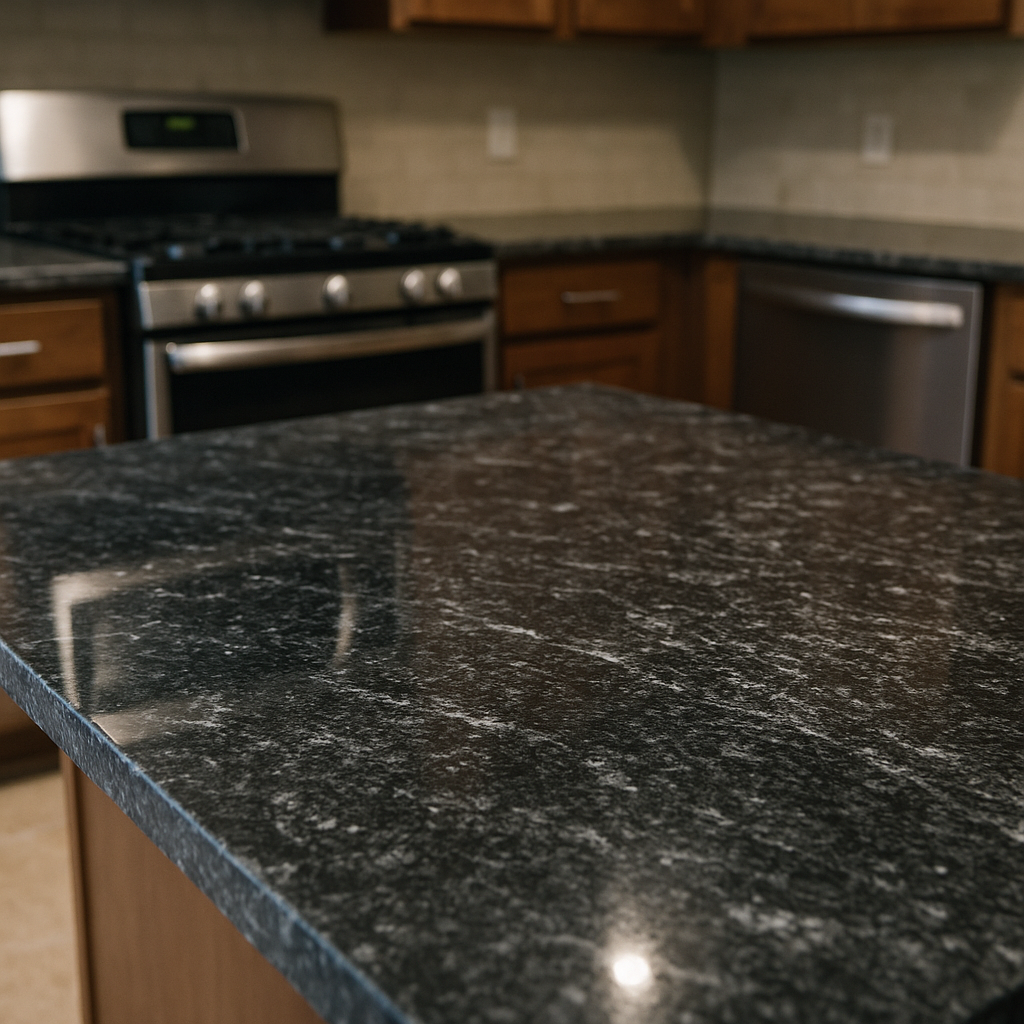
Quartz and granite sit at the top of most kitchen counter shortlists, and they get compared as if they were two flavors of the same thing. They are not. One is a slab of rock cut straight from the earth. The other is manufactured, ground stone held together with resin. That single difference in how each surface is made drives almost every practical choice you will weigh: whether you need to seal it, whether a hot pot can damage it, and whether the piece in the showroom will look like the one in your kitchen. Understand the material first, and the "which is better" question mostly answers itself based on how you cook, clean, and live.
How Each Surface Is Actually Made
Granite is a natural igneous rock. It forms deep underground as molten material cools slowly, allowing crystals of quartz, feldspar, and mica to grow and lock together. Quarries cut it into large blocks, then saw those blocks into slabs. Because no two pockets of the earth cooled the same way, every granite slab carries its own mineral pattern, color spread, and veining. What you are buying is a slice of a specific rock, and there is only one of it.
Quartz counters take a different path. They are an engineered stone: roughly 90 to 95 percent ground natural quartz mixed with resin binders and pigments, then compacted and cured into slabs under heat and pressure. The quartz mineral gives the surface its hardness. The resin does two jobs that matter later: it holds everything together, and it seals the surface completely from the inside. Color and pattern are added during manufacturing, so a quartz slab looks the way the maker intended, batch after batch.
That contrast, natural rock versus bound-together mineral and resin, is the root of every difference below.
Porosity: The Sealing Question
Granite has microscopic pores because it is a real stone with gaps between its crystals. Those pores can let liquids soak in, which is why granite is sealed. A penetrating sealer sinks into the surface and fills the pore network, so spills sit on top long enough to wipe away instead of driving into the stone and staining it. Sealing is not a one-time event over the life of the counter; the barrier wears with use and cleaning, so granite is treated as an ongoing, low-effort maintenance surface.
Quartz has no such pores. The resin fills every gap during manufacturing, so the finished surface is non-porous. Nothing soaks in, which means quartz never needs sealing at any point. A red wine spill, oil, or coffee sits on the surface until you wipe it up. For a busy kitchen where the counter takes daily abuse, that "wipe and done" behavior is the single biggest reason people choose quartz.
Think of it like the difference between an unfinished wood cutting board and a plastic one. The wood has a grain that can absorb and hold what you cut on it, unless you oil it regularly; the plastic simply has nowhere for liquid to go. Granite is the board you condition; quartz is the board you rinse.
Heat: Where Natural Rock Pulls Ahead
Here, the materials trade places. Granite forms under intense heat and handles high temperatures at the counter without issue. A hot pan set on granite will not scorch or discolor it under normal use.
Quartz is the more heat-sensitive of the two because of the resin that makes it non-porous. Resin is a polymer, and polymers soften and discolor when heated. A pot straight off the burner or a baking tray out of the oven can leave a scorch mark or a dull spot on quartz that will not wipe away. The mineral content is extremely hard and durable, but the binder holding it together has a temperature limit that the stone itself does not. This is a use-habit factor more than a durability one: a quartz counter lasts for decades, it just wants you to reach for a trivet.
Looks: One of a Kind or Made to Match
Appearance is where the "which is better" question turns personal. Granite gives you natural variation. Because you are choosing an actual slab, you get real depth, mineral flecks, and movement that a manufactured surface has to imitate. If you want a counter where the pattern is truly unrepeatable, granite delivers that by definition.
Quartz gives you control and range. Manufacturing lets makers produce consistent color and pattern, plus shades and looks that natural stone does not offer, including bright whites and uniform tones that are hard to find in granite. If you want a calm, even surface with no surprise dark patches, or you want to match a specific design palette, quartz is built for that. The choice is less about quality and more about taste: earthy and unique, or refined and predictable.
Stain Resistance and Everyday Cleanup
The porosity difference shows up again in daily cleaning. Because quartz does not absorb liquids, it resists staining and prevents spills from setting in. Granite resists stains well, too, as long as its sealer is doing its job; a properly sealed granite counter shrugs off ordinary kitchen spills. The practical distinction is what happens when maintenance slips. Granite that has gone too long between sealings can absorb a stain that a wipe would have stopped a month earlier. Quartz has no such window because there is no maintenance step to fall behind on.
UV and Outdoor Use
If the counter is headed for an outdoor kitchen or a spot with strong, direct sun, the material choice flips toward granite. Granite is a natural rock and takes sun exposure in stride. Quartz can be a problem outdoors because prolonged UV exposure can fade the pigments in some colors, and the resin binder is formulated for indoor conditions rather than constant sun and weather. For a covered indoor kitchen, this never comes up. For an open patio bar, granite or another natural stone is the safer long-term pick.
Quartz vs Granite at a Glance
| Factor | Granite | Quartz |
|---|---|---|
| Material | Natural stone, quarried in slabs | Engineered: ~90-95% ground quartz plus resin |
| Sealing | Porous, needs periodic sealing | Non-porous, never needs sealing |
| Heat | Very heat-resistant | Resin can scorch; use a trivet |
| Look | Unique, one-of-a-kind slabs | Consistent color, more shade options |
| Stain / porosity | Resists stains when sealed | Non-porous; makers say it resists stains and bacteria |
Both Are Durable, Both Need a Pro
Neither material is fragile. Both are premium stone surfaces that hold up for decades in a kitchen, and the decision between them is about maintenance style and use, not one being sturdier than the other. Both also share one hard requirement: professional fabrication and installation. These are heavy stone slabs, cut to exact dimensions for your sink, cooktop, and cabinet run, and the fabricator handles the templating, precise cuts, seams, and the safe lifting and securing to your cabinets. This is not a weekend DIY job, and a mismeasured slab is an expensive mistake to make twice.
Frequently Asked Questions
Granite is the one that gets sealed, because it is porous. It is sealed at installation and then resealed periodically over its life. You do not have to guess when it is due: run a simple water-drop test by leaving a small puddle on the surface for a few minutes. If the water beads up, the sealer is still working. If it soaks in and darkens the stone, it is time to reseal. Quartz is non-porous, so it never needs sealing, and there is no test to run.
On granite, yes, it handles high heat without issue. On quartz, no, always use a trivet or hot pad. The resin binder that makes quartz non-porous can begin to scorch or discolor around 300 degrees Fahrenheit, and a pan straight off the burner runs far hotter than that, so the trivet is non-negotiable, not optional. The damage does not wipe away, which is the one habit a quartz counter really asks of you.
Quartz, because its non-porous surface does not absorb liquids at all. Nothing soaks in to become a stain, and manufacturers say the sealed-from-within surface gives bacteria nowhere to lodge, unlike a porous granite that is unsealed or overdue for resealing. That resistance, with no upkeep required, is a big part of why quartz became a favorite for kitchen counters where food prep happens daily.
Granite varies; quartz is consistent. Every granite slab is one of a kind, so you pick the specific slab for its veining and movement, and what you approve in the yard is exactly what goes in your kitchen. Quartz is engineered to have a repeatable color and pattern. That consistency matters most if you need two separate pieces or one long run to match cleanly, since natural granite can shift in tone from one slab to the next.
Granite is the safer outdoor choice. Strong, direct sunlight fades the pigments in quartz over time, and darker colors fade fastest because they contain more pigment to lose. On top of that, most quartz makers void the warranty entirely for outdoor installation, so sun damage would be on you. Granite is a natural rock that takes sun and weather in stride, so for an open-air kitchen or a sunny bar top, granite or another natural stone holds up better in the long run.
Yes, and neither is a do-it-yourself project. Both are heavy stone slabs that need professional templating and precise cutting. A fabricator places seams at a sink or cooktop cutout, where the break in the stone hides them, rather than in an open run. Any overhang past about 10 inches, such as a breakfast bar, needs plywood or steel support underneath so the stone does not crack. The weight alone, plus the cost of a wrong cut, is why this always goes to a pro.
Book a free in-home consultation and see slabs side by side before you commit — get the counter that fits how you actually cook. Clover Valley Home Service serves Greater Sacramento, Placer, and El Dorado counties. CSLB #1003154. Call (916) 742-3141.
