
Musty Smell in Just One Room? What It Usually Means
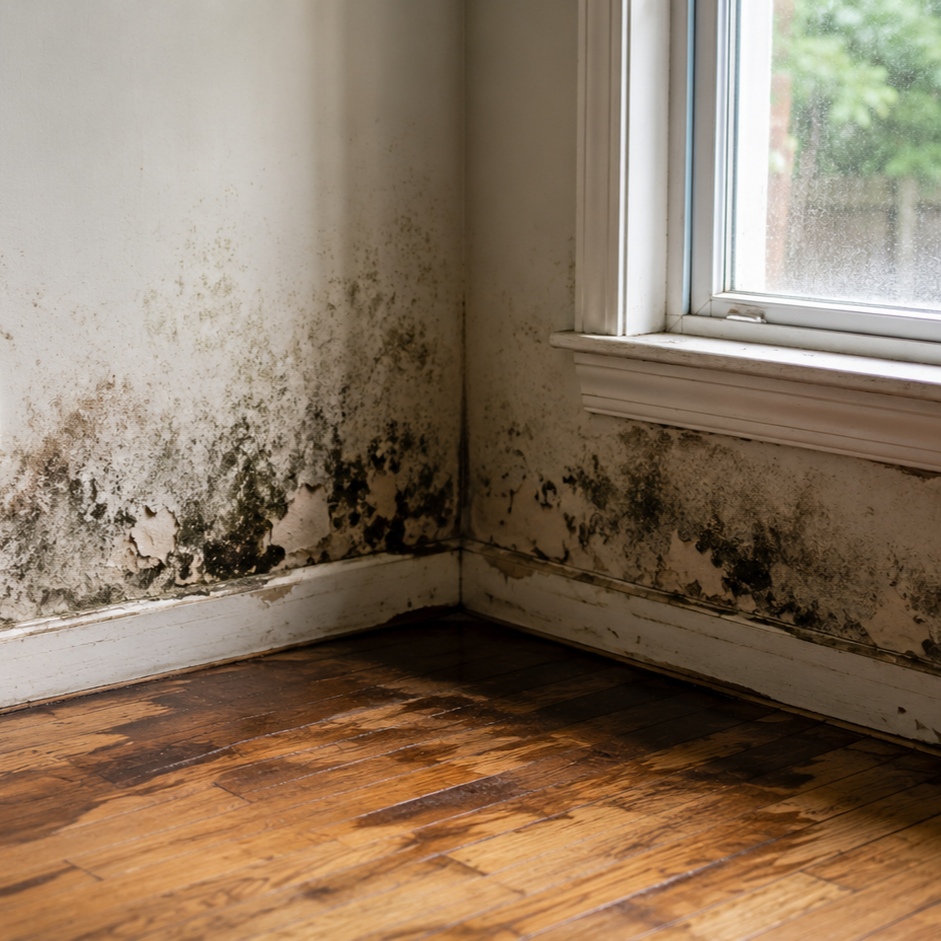
Quick Answer: A musty smell concentrated in one room almost always means there's hidden moisture and mold or mildew growing somewhere nearby — behind a wall, under flooring, in a closet, around a window, or in the ductwork serving that room. Mold needs moisture to grow, so the smell is really a signal of a water or humidity problem. Track down the moisture source: a leak, condensation, poor ventilation, or water intrusion. The smell won't clear for good until the moisture is fixed.
That damp, earthy, "old basement" smell in a single room is one of the more useful warnings a house gives you, because it's specific. When the odor is confined to one room rather than the whole house, it points you to a localized moisture problem right there. The musty smell itself is the byproduct of mold or mildew growing, and mold only grows where there's moisture — so the smell is really telling you to go find the water.
Why One Room Smells Musty
Mold and mildew release the musty odor as they grow, and they grow wherever there's enough moisture and something organic to feed on — drywall, wood, carpet, dust. When the smell is contained to one room, the moisture feeding that growth is usually in or near that room. So instead of a vague whole-house humidity issue, you're looking for a specific source: a leak, condensation, or water getting in at one spot.
The mold is often hidden, which is why you smell it before you see it. It can be growing behind the drywall, under the flooring, inside a closet, behind furniture against an exterior wall, or in the air ducts that serve that room. The nose finds it first.
Where the Moisture Usually Comes From
A few sources account for most single-room musty smells:
- A plumbing leak — a slow drip inside a wall or under a floor from a pipe, or a fixture in or above that room, keeps materials damp and feeds mold.
- A roof or window leak — water getting in around a window, or down from a roof problem above that room, often shows up as a musty corner or a stain.
- Condensation and poor ventilation — a room that doesn't get good airflow, or one with a cold exterior wall, can collect condensation, especially a bathroom, closet, or room over a crawlspace.
- Crawlspace or foundation moisture—damp rising from below into a ground-floor room.
- HVAC issues — mold in the ductwork or a dirty, damp evaporator coil can push a musty smell into one room when the system runs.
The pattern often gives it away: a smell that's worse after rain points to intrusion from outside; one that's worse when the AC or heat runs points to the ductwork or the HVAC system; one centered on a bathroom or closet points to ventilation and condensation.
| Clue | Likely source |
|---|---|
| Worse after rain | Roof, window, or foundation leak |
| Worse when HVAC runs | Mold in ducts or on the coil |
| Centered on a bathroom/closet | Poor ventilation, condensation |
| Stain or soft spot on wall/floor | Hidden plumbing or water leak |
| Ground-floor room, damp feel | Crawlspace or foundation moisture |
What to Do About It
Start by trying to locate the moisture. Look for water stains, peeling paint, warped or soft flooring, and dampness on walls, especially exterior walls and around windows. Check whether the smell tracks with rain or with the HVAC running. Improve ventilation in the room and run a dehumidifier, which helps with the smell but doesn't fix a leak. Masking the odor with air fresheners only hides the warning — the mold keeps growing as long as the moisture is there.
Because the source is often hidden inside walls, floors, or ductwork, this is frequently a point to bring in a professional who can find the moisture, identify the extent of any mold, and address both the water source and the growth. Hidden leaks and mold behind surfaces aren't a DIY guess, and mold that's spread inside materials needs proper handling. If anyone in the home has worsening allergy or respiratory symptoms in that room, that's another reason not to let it linger. The smell clears for good only when the moisture that caused it is found and stopped.
It's also worth acting promptly rather than living with it, because moisture problems rarely stay the same size. A small leak feeding a patch of mold today becomes a larger area of damaged drywall, subflooring, or framing the longer it goes unaddressed, and what would have been a minor repair grows into a bigger one. The musty smell is essentially an early-warning system — catching it while it's just an odor, before there's visible damage or spreading mold, is almost always the cheaper and simpler path. Trusting your nose here really pays off.
Frequently Asked Questions
Because the moisture feeding the mold is localized to that room. Mold produces the musty smell and only grows where there's moisture, so a smell confined to one room points to a specific source nearby — a hidden leak, condensation, water intrusion around a window, or mold in the ductwork serving that room. The isolated smell is actually a helpful clue to where the water problem is.
A musty, earthy smell is the classic sign of mold or mildew growing, and it usually means there's moisture supporting that growth somewhere nearby. Occasionally, a similar smell comes from stagnant water, like a dry drain trap or standing water in an HVAC pan, but those are moisture issues too. Either way, a persistent musty smell points to a moisture problem worth tracking down.
Look for the moisture. Check for water stains, peeling paint, warped or soft flooring, and damp spots on walls and around windows. Notice whether the smell worsens after rain (pointing to intrusion) or when the HVAC runs (pointing to ducts or the coil). Bathrooms and closets point to ventilation. If you can't find it, the source is likely hidden in a wall, floor, or duct.
Yes. Mold can grow in damp ductwork or on a dirty evaporator coil, and when the system runs, it pushes that musty smell into the rooms it serves — sometimes noticeably in one room. A telltale sign is that the smell gets worse whenever the AC or heat kicks on. Having the system and ducts inspected and cleaned addresses that source.
Not while the moisture remains. You can reduce it with ventilation and a dehumidifier, but as long as the underlying water source is feeding mold growth, the smell returns — and the mold keeps spreading. Air fresheners only mask it. The smell clears permanently only after the moisture source is found and fixed, and any mold is properly addressed.
Follow the Smell to the Water
A musty smell in one room is your house pointing at a hidden moisture problem in that spot. The odor is mold doing its thing, and mold can't grow without water — so the real task is finding the leak, the condensation, or the intrusion behind it. Look for the telltale stains and track whether the smell follows rain or the HVAC, and don't just cover it up. Fix the moisture, and the smell goes with it.
Musty smell you can't track down in one room? — Get the moisture source found and the problem fixed at the root. Clover Valley Home Service serves Greater Sacramento, Placer, and El Dorado counties. CSLB #1003154. Call (916) 742-3141.
