
Water Behind Your Walls? Warning Signs to Catch Early
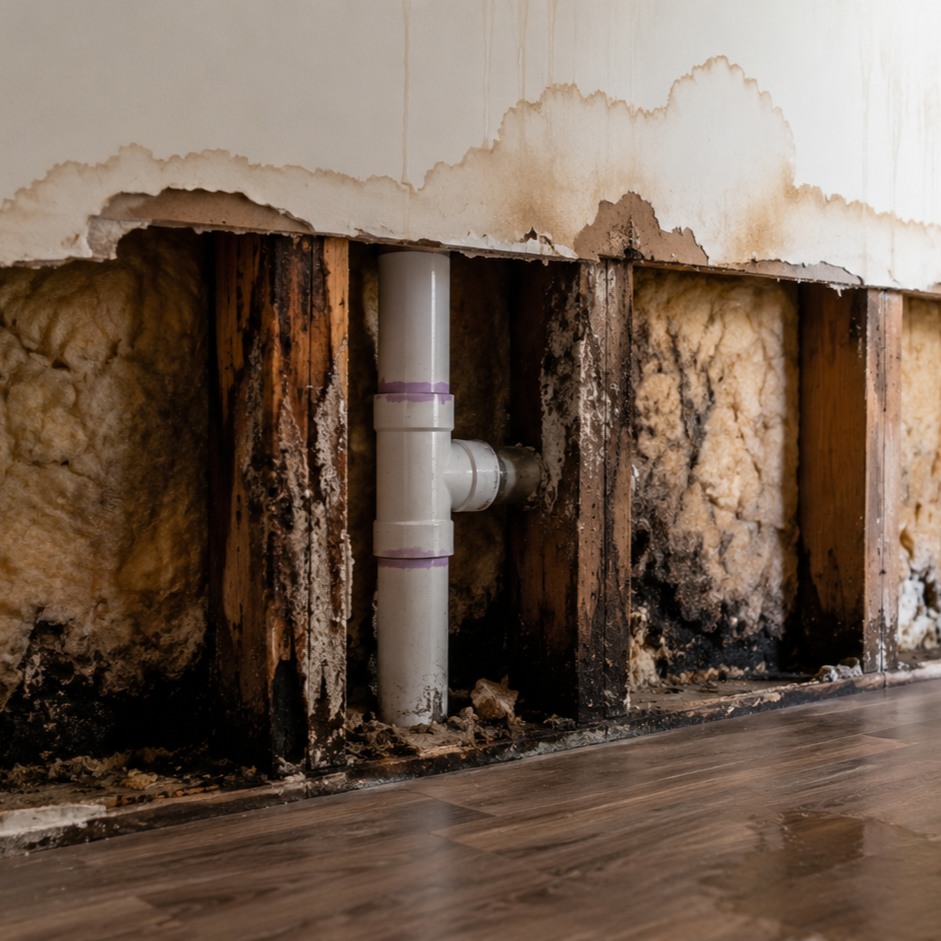
Quick Answer: Water hiding behind a wall gives itself away through a handful of signs: discoloration or yellow-brown stains on drywall, paint that bubbles or peels, a persistent musty smell, soft or spongy spots when you press the wall, visible mold along baseboards or corners, and warped or buckling trim and flooring nearby. A sudden jump in the water bill can point to a hidden supply leak feeding it. Catching these early matters because trapped moisture rots framing, ruins insulation, and grows mold inside the wall cavity. If you spot the signs, find the moisture source before the damage spreads.
The trouble with a leak behind a wall is that the wall hides it. By the time water shows on the surface, it has usually been working inside the cavity for a while — soaking insulation, dampening framing, and feeding mold where you can't see it. Learning to read the early signs lets you find hidden water intrusion before it turns into a much larger repair.
Why Hidden Water Is So Damaging
A wall cavity is a closed, poorly ventilated space full of materials that don't handle moisture well: paper-faced drywall, wood framing, and insulation. When water gets in and can't dry out, it lingers. Wood begins to rot, insulation loses its effectiveness and stays wet, and mold finds the dark, damp conditions it needs to grow. None of this is visible from the room, which is exactly why the indirect signs matter so much. They're your only early warning.
The source can be a plumbing leak inside the wall, a roof or window leak channeling water down, or moisture wicking up from below. Wherever it comes from, the warning signs on the surface are similar.
Stains and Discoloration
One of the first visible signs is staining. Water moving through drywall leaves yellow, brown, or coppery discoloration as it carries minerals and dissolves the paper facing. A stain that grows, darkens, or keeps coming back after you paint over it is a strong sign of active moisture behind the surface. The shape often spreads outward in irregular rings as the water moves.
Paint and Wallpaper That Won't Stay Put
Moisture behind a wall pushes outward against the paint or wallpaper. That pressure makes paint bubble, blister, or peel, and causes wallpaper to lift at the seams or edges. When a section of wall finish is failing while the rest is fine, the localized failure usually marks where moisture is collecting behind it.
The Smell You Notice Before You See Anything
Often, the nose finds it first. A persistent musty, earthy odor in a room — strongest near a particular wall — is a classic sign of mold or mildew growing in a damp wall cavity. If a room smells damp even when it looks clean and dry, that smell is information. Hidden moisture frequently announces itself by odor well before any visible mark appears.
| Warning sign | What it indicates |
|---|---|
| Yellow-brown stains on drywall | Water moving through the wall |
| Bubbling or peeling paint | Moisture pressure behind the finish |
| Persistent musty smell | Mold or mildew in the cavity |
| Soft or spongy wall spots | Saturated drywall or rotting framing |
| Visible mold at baseboards/corners | Moisture escaping the cavity |
| Warped trim or buckling floor | Water reaching adjacent materials |
What You Feel and What Spreads
A wall with water behind it can feel different. Press gently, and a saturated area may feel soft, spongy, or give slightly, where a dry wall is firm. As moisture continues, it reaches the materials around the wall — baseboards warp, trim pulls away, and nearby flooring buckles or cups. Visible mold creeping out along baseboards or in corners means the moisture has been present long enough to escape the cavity. Each of these is a sign that the problem has progressed and shouldn't wait.
The Clue on Your Water Bill
If the hidden water is coming from a plumbing supply line inside the wall, it leaks continuously under pressure, and that shows up on the water bill. An unexplained jump in the bill, paired with any of the wall signs above, points toward an active supply leak feeding the intrusion. Checking your meter with all water off can confirm whether water is moving when it shouldn't be.
Don't just paint over a recurring water stain. Covering it hides the symptom while the moisture keeps working inside the wall — rotting framing and growing mold out of sight. Find and fix the source first, then repair the surface.
Why Finding the Source Matters Most
The visible damage is only the surface of the problem. The real work is identifying where the water is coming from, because repairing the drywall without stopping the source just resets the clock until it happens again. A leak inside a wall, a window flashing failure, and rising damp all looks similar from the room, but need completely different fixes. Locating the source — often with moisture meters and thermal imaging that see into the wall without tearing it open — lets the repair address the cause, not just the stain.
Frequently Asked Questions
Look for staining or discoloration on the drywall, paint that bubbles or peels, a persistent musty smell, and soft or spongy spots when you press the wall. Mold along baseboards and warped trim nearby are later signs. A musty odor and recurring stains are often the earliest clues, sometimes before any obvious damage appears.
A musty smell with no visible cause usually means mold or mildew is growing somewhere you can't see — frequently inside a wall cavity that's holding moisture. The smell is produced by microbial growth in the damp, dark space. It's a reliable early warning that water is present behind the surface, even when the wall looks fine.
Not always, but a stain that grows, darkens, or returns after painting over it usually means moisture is still active behind the wall. A single old stain that stays exactly the same and is fully dry may be from a past, resolved issue. When in doubt, a moisture meter can tell you whether the area is currently wet.
Yes, readily. A wall cavity is dark, enclosed, and full of materials mold can feed on, so trapped moisture often leads to mold growth inside the wall. That's why a musty smell is such a common early sign. The longer the moisture stays, the more the mold spreads, which is a key reason to find the source early.
They use tools that see moisture without demolition — moisture meters that read dampness in the material and thermal imaging cameras that reveal temperature differences where water is present. These allow a pro to locate the wet area and often the source while keeping cutting to a minimum, so the repair is targeted rather than exploratory.
Don't just cover the stain. Identify and stop the water source first — whether it's a plumbing leak, a window or roof issue, or rising moisture — then dry the cavity and repair the damage. Catching it early keeps it to a contained repair. If the source isn't obvious, professional moisture detection can pinpoint it.
Read the Signs Before the Wall Does
Hidden water intrusion hides until the damage forces its way to the surface, so the early signs — stains, bubbling paint, a musty smell, soft spots — are your best chance to catch it. The most important step isn't patching the drywall; it's finding where the water is getting in. Address the source early, and you keep a hidden leak from quietly rotting the structure behind your walls.
Spotting stains or a musty smell on a wall? — Get the moisture source located with meters and thermal imaging before it rots the framing. Clover Valley Home Service serves Greater Sacramento, Placer, and El Dorado counties. CSLB #1003154. Call (916) 742-3141.
