
Soft, Spongy Wood Around Windows? What It’s Telling You
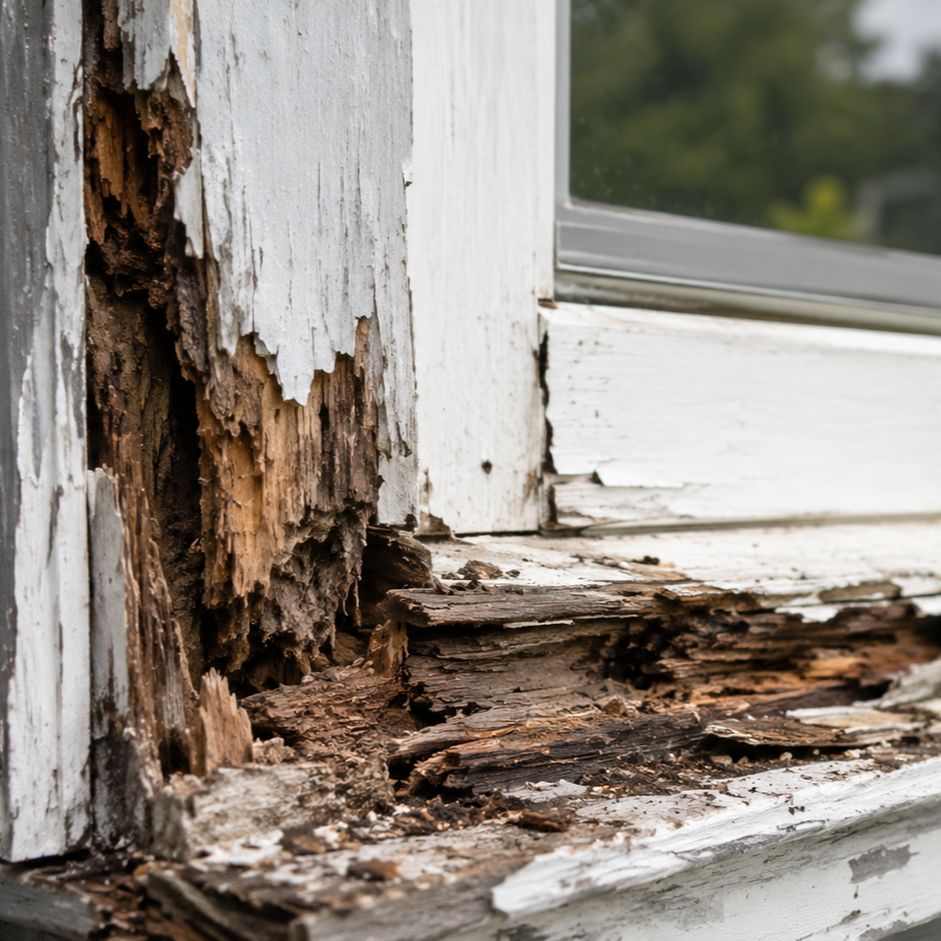
Quick Answer: Soft, spongy wood around a window means water has been getting in and the wood is rotting. Healthy window framing is firm; wood that gives under finger pressure or crumbles has lost its structure to moisture and decay. The water usually comes from failed caulk or flashing, a cracked sill, condensation, or siding issues above the window. The danger is that rot spreads along connected wood into the wall framing you can't see, so the soft spot you found is often smaller than the real damage. Stop the water source, then have the extent of the rot assessed before repairing.
You go to clean a window or open it, press the frame, and your finger sinks into wood that should be solid. Soft, spongy wood around a window is never just cosmetic — it's the visible end of a water problem that has been quietly rotting the structure. Understanding what it's telling you helps you act before the damage spreads further than the spot you found.
Firm Wood vs. Failing Wood
Sound window framing is firm and solid. When wood feels soft, spongy, or springy — or crumbles, flakes, or sinks under light pressure — it has been saturated repeatedly, and decay has set in. Rot-causing fungi feed on damp wood and break down the fibers that give it strength, leaving it lightweight and punky. So the texture itself is the diagnosis: that softness is structural failure, not surface wear.
The reason windows are such common sites for this is that they're penetrations in the wall, surrounded by joints and seals that all have to keep water out. When any of those fail, the window frame and the surrounding wood are the first to get wet.
Where the Water Is Coming From
Tracking the source is the important part, because the rot will continue until the water stops. The usual entry points around a window include failed or missing caulk along the frame, deteriorated flashing above the window that's supposed to divert water around it, a cracked or improperly sloped sill that lets water pool instead of shedding it, and gaps where the siding or trim meets the window. Interior condensation can also feed rot on the inside, especially on older single-pane windows. Sometimes the water originates higher up — a siding or roof issue above the window channels water down into the frame.
| Likely source | How water gets in |
|---|---|
| Failed caulk at the frame | Gaps let water seep behind trim |
| Deteriorated flashing above | Water runs into the frame, not around it |
| Cracked or flat sill | Water pools and soaks instead of draining |
| Siding/trim gaps | Wind-driven rain enters the joint |
| Interior condensation | Moisture collects on cold frames |
Why the Damage Is Usually Bigger Than It Looks
This is the part that surprises people. Rot doesn't stay put — it follows the moisture along connected wood. A soft spot on a windowsill often means the rot has traveled into the framing around the opening, down into the wall, or into the trim and sheathing behind the siding. Wood that touches wet wood gets wet, and the decay marches along. So the soft area you can feel is frequently just the accessible edge of a larger problem hidden inside the wall. That's why poking a single spot and patching it rarely solves anything — the rot you can't reach keeps going.
The Risks of Leaving It
Beyond the structural weakening, persistent moisture around a window invites mold growth in the wall cavity and can attract wood-destroying insects, which are drawn to softened, damp wood. A rotted window frame also stops sealing and insulating properly, letting in drafts and more water in a worsening cycle. What begins as a small soft patch can grow into a repair involving the window, the framing, the sheathing, and the interior finishes if it's allowed to continue.
Resist the urge to fill a soft spot with wood filler and paint over it. Filler bridges the surface but does nothing about the moisture or the rot spreading inside the frame and wall. The wood under the patch keeps decaying, and the real damage grows out of sight.
What to Do Next
The right sequence is source first, extent second, repair third. Stop the water from getting in — reseal, repair flashing, or address whatever is channeling water to the window. Then have the full extent of the rot assessed, because that determines the scope of the work, from replacing some trim to rebuilding part of the frame and wall. Probing the wood reveals how far the soft area reaches, and opening up the affected section shows what's happened behind it. A useful rule of thumb is that the repair has to reach back to solid, sound wood in every direction — anything less leaves live rot in place to start again. That's also why the assessment is worth doing before committing to a fix, since it tells you up front whether the problem is a contained spot or a frame that has gone further than the surface let on. Repairing only what's visible while leaving hidden rot in place means it comes back. A proper repair removes all the compromised wood and addresses the moisture that caused it.
Frequently Asked Questions
It means water has been getting into the wood, and rot has set in. Decay fungi feed on the damp wood and break down the fibers, leaving it soft, spongy, or crumbly instead of firm. The softness is a sign of structural breakdown and indicates an ongoing moisture problem that needs to be identified and addressed.
Often further than the soft spot you can feel. Rot travels along connected wood wherever moisture has reached, so it commonly extends from the sill into the surrounding framing, the wall, or the sheathing behind the siding. The accessible soft area is frequently just the edge of the damage, which is why the full extent should be assessed before repair.
No, that only hides the problem. Wood filler covers the surface but doesn't stop the moisture or remove the rot spreading inside the frame and wall, so the decay continues underneath. A lasting fix means stopping the water source, removing all the rotted wood, and then repairing with sound material — not patching over softened wood.
Common sources are failed caulk along the frame, deteriorated flashing above the window, a cracked or poorly sloped sill that lets water pool, and gaps where siding or trim meets the window. Interior condensation can contribute too. Sometimes the water comes from a siding or roof issue higher up that directs it down into the window.
It's a structural and health concern if left alone. The rot weakens the framing, the trapped moisture can grow mold in the wall, and softened wood attracts wood-destroying insects. A rotted frame also fails to seal properly, letting in more water and air. Addressed early, it's a contained repair; ignored, it can spread into a much larger one.
It depends on the extent of the damage and the window's condition. If the rot is limited and the window is otherwise sound, repairing the affected wood and resealing may be enough. If the frame is extensively rotted or the window is failing anyway, replacement, along with rebuilding the damaged framing, is often the better long-term choice. An assessment determines which.
The Soft Spot Is a Signal, Not the Whole Story
Spongy wood around a window is telling you water has been getting in and rot is underway — and that the damage likely reaches beyond what you can feel. The fix isn't filler; it's stopping the water, determining how far the rot has spread, and removing it all. Acting on that signal early keeps a soft windowsill from becoming a rebuilt wall.
Found soft, spongy wood around a window? — Get the water source stopped and the full extent of the rot assessed before it spreads into the wall. Clover Valley Home Service serves Greater Sacramento, Placer, and El Dorado counties. CSLB #1003154. Call (916) 742-3141.
