
7 Warning Signs Your Electrical Panel Is Outdated
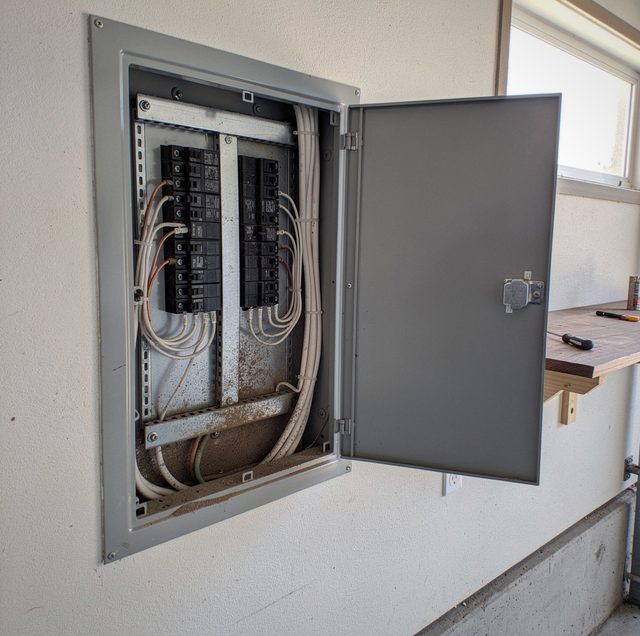
You open the metal door on the side of the garage or the closet under the stairs, and there it is: a grid of switches, some labeled in handwriting you don't recognize, one or two unmarked, and a faint smell of warm dust when the door swings open. Most people only look at this box when something trips, and even then they flip the switch back and move on without asking the bigger question underneath it: is this panel actually built for the house it's feeding today, or is it still doing the job it was sized for decades ago?
That question matters more than it looks. A panel is the single point where every circuit in the house meets the incoming power supply, and its age shows up less in how it looks and more in what it can no longer do quietly and safely. Some signs are obvious the moment you open the door. Others only show up as a pattern over weeks or months. Knowing both kinds gives you a real answer instead of a guess.
Why the Age of a Panel Matters More Than Its Appearance
A panel that looks clean and sits behind a tidy door can still be running well past its intended service life, while a slightly dated-looking panel with modern breakers can be perfectly sound. Age matters because of what changed around the panel, not because metal wears out on a schedule. Homes now run far more continuous electrical loads than they did when many panels were installed: multiple computers and chargers, larger refrigerators, window or central air conditioning, electric ranges, and increasingly, vehicle chargers. A panel sized for a smaller, lighter household load gets asked to do more work than its design ever anticipated, and it shows that strain through heat, nuisance trips, and worn components rather than a visible expiration date.
The internal parts also age unevenly. Breaker contacts wear with every trip and reset, bus bars can loosen slightly over years of thermal expansion and contraction, and the connections behind the dead front were only ever tightened once, at installation. None of that is visible from the front of the panel. That's why the signs below matter more than the panel's appearance.
A Fuse Box Instead of Circuit Breakers
If opening the panel reveals screw-in or cartridge fuses rather than breaker switches, that's an older style of protection that predates the reset-and-restore convenience most homeowners expect today. A blown fuse has to be identified, removed, and replaced with one of the correct rating. It's not uncommon to find a fuse swapped for a higher-rated one at some point because the original kept blowing. That workaround defeats the purpose of the fuse: instead of protecting the wire from overheating, it lets more current flow than the circuit was designed to carry.
Fuse boxes also tend to run fewer, more heavily loaded circuits than a modern layout, since they were installed before kitchens, home offices, and bathrooms each carried several dedicated circuits of their own. A fuse-based system isn't inherently dangerous, but it's a clear marker of an electrical system designed around a much smaller set of loads than most households use now.
Double-Tapped or Overcrowded Breakers
Open the panel and check where the wires connect to each breaker. A double tap is when two wires are connected to a single breaker terminal that was designed to grip only one. Some breakers are rated for two conductors and clearly marked for it; most aren't, and forcing two wires under a single-wire terminal means at least one of them isn't making a secure, even connection. Over time, that loose contact point heats up each time the circuit carries a real load, and repeated heating and cooling can further degrade the connection.
Overcrowding shows up differently: a panel with every slot filled, tandem breakers doubled up wherever there was room, and no spare capacity for a new circuit without pulling something out first. A panel that started with room to grow and now has none is a sign the household's electrical demand has outpaced what the panel was built to distribute, one added circuit at a time, until there was nowhere left to add one.
Rust, Discoloration, or Heat Damage Inside the Panel
Pull the dead front off (or ask an electrician to, since this is the point where a visual check should become a professional one) and look for staining. Brown or black scorch marks around a breaker, a melted or bubbled patch on the plastic housing, or a burnt smell when the door opens are signs that a connection has been running hot, sometimes for a long time before anyone noticed. Rust on the metal enclosure, especially near the bottom where moisture collects, indicates water intrusion that can corrode connections and buss bars from the inside, even when the outside of the panel looks fine.
Discoloration doesn't always mean immediate danger, but it never means nothing. Heat marks are the panel's own record of a connection that got hotter than it should have, and a panel that's shown one hot spot has the same wiring, the same age, and the same installation quality everywhere else inside it.
Not Enough Capacity for the Loads a Modern Home Actually Runs
Lights that dim slightly when the air conditioner kicks on, a microwave that trips a breaker when it runs alongside a toaster, or an electrician who tells you a new appliance or a vehicle charger will require a panel upgrade before it can be installed: these are all forms of the same underlying issue, a panel whose total capacity, or whose available room for new circuits, can't cover what the house is asking of it. Older panels were frequently sized for a household with a handful of major appliances; a modern kitchen alone can rival what an entire older home once used.
This kind of undersizing isn't usually one dramatic event. It's a slow accumulation of small additions: a window air conditioner, a home office, a space heater- each minor alone- that together push a panel past what it can comfortably deliver today.
How an Outdated Panel Affects Insurance and Resale
Panel age surfaces in ways that go beyond the electrical bill. Some insurers ask about panel type and age during underwriting, and an older or fuse-based system can affect the terms offered or trigger a request for an inspection before a policy is issued or renewed. That reflects the claims history for certain equipment types rather than a judgment about any one panel, but it's a conversation homeowners encounter more often than they expect.
Resale carries a similar effect. A home inspection during a sale routinely includes a look at the panel, and an inspector who flags an aging panel gives a buyer's agent something to negotiate over, whether or not it's actually causing problems day-to-day. Buyers and lenders both tend to view an older panel as a deferred cost, and that perception can shape an offer even when the panel has run without incident for years. Addressing it ahead of a sale generally keeps the conversation on the seller's terms instead of the buyer's.
What an Electrician Checks During a Panel Inspection
A panel inspection goes well beyond a glance at the switches. An electrician typically starts outside the panel, checking the service entrance, the meter connection, and the grounding and bonding, since a panel is only as safe as the system feeding it. Inside, they'll pull the cover and inspect the bus bars for pitting or discoloration, check breaker terminals for double-taps and loose connections, and test individual breakers to see whether they trip at their rated current rather than remain closed under an overload.
They'll also count and compare: how many circuits the panel currently holds against how many open slots remain, whether the panel's total rated capacity matches or falls short of the home's actual electrical demand, and whether any wiring gauge feeding the panel looks undersized for the breakers it's paired with. Grounding gets particular attention, since a panel with inadequate or missing grounding can look completely normal from the front while leaving every circuit in the house without a safe path for a fault. The inspection ends with a clear answer: whether the panel can be brought to a safe working condition with targeted repairs, or whether its age, capacity, and internal wear point to a full replacement.
Weighing Repair Against Replacement
Not every warning sign calls for a whole new panel. A single double-tapped breaker, a loose connection, or one worn breaker can often be corrected on its own, provided the bus bars, wiring, and grounding are otherwise in good condition. Replacement becomes the more realistic path when the issues are systemic: a fuse-based system with no room for breaker-based circuits, heat damage across multiple breakers, or a rated capacity that can't cover the loads a household now runs.
The real question usually comes down to whether the panel's bus bars, enclosure, and rated capacity still match the house it serves, or whether the house has grown beyond what that structure was built to carry. An electrician who's opened the panel and traced the wiring behind it can answer that far better than any checklist, since two panels that look identical from the outside can be in very different condition inside.
Frequently Asked Questions
Age alone isn't the deciding factor; a panel installed forty years ago with breaker-based protection, adequate capacity, and no internal heat damage can still be sound, while a panel installed within the last fifteen years can already be undersized if the home added a large addition, a workshop, or a vehicle charger since then. What matters more than the installation date is whether the panel's rated capacity and physical condition match the home's current electrical demand.
Some signs are visible without removing the cover: a fuse box instead of breaker switches, a warm or discolored panel door, a burning smell near the panel, or breakers that trip repeatedly under normal use. Anything that requires pulling the dead front, such as checking for double taps or internal scorch marks, should be left to a licensed electrician, since the panel's interior carries live components even when the main breaker is off.
Not always. A single addition, such as a hot tub, a workshop tool, or a second air conditioning unit, can sometimes be added with a subpanel or by reassigning existing circuit capacity if the main panel has enough headroom. A full panel replacement becomes necessary when the main panel's total rated capacity, not just its open slots, falls short of what the combined household load requires.
A panel upgrade replaces the main panel itself, increasing its total rated capacity and typically its number of available circuit slots. A subpanel is a secondary panel fed from the main one, useful for adding circuits to a detached structure or a renovated space without touching the main panel, but it doesn't increase the main panel's overall capacity. If the main panel is already at its limit, a subpanel only redistributes the load rather than solving the underlying capacity shortfall.
Repeated surges, such as those from lightning strikes on nearby power lines or the switching of large appliances, can accelerate wear on breaker contacts and connections, showing up later as the heat discoloration or nuisance tripping described above. One surge event on its own doesn't necessarily mean the whole panel needs replacing, but a panel that's already older and marginally sized has less capacity to absorb that added stress without a component failing.
Not necessarily. A single flickering fixture is often a loose bulb, a failing dimmer switch, or a wiring issue local to that one fixture. Flickering that happens across multiple rooms at once, especially when a large appliance turns on, points toward a shared circuit or panel-level issue, such as a loose connection at the breaker or bus bar, rather than a problem with any one light fixture.
Schedule a panel inspection — get a clear, no-pressure read on whether your electrical panel is keeping up with your home's demand. Clover Valley Home Service serves Greater Sacramento, Placer, and El Dorado counties. CSLB #1003154. Call (916) 742-3141.
