
Sticking Interior Door? 5 Causes and the Fixes That Last
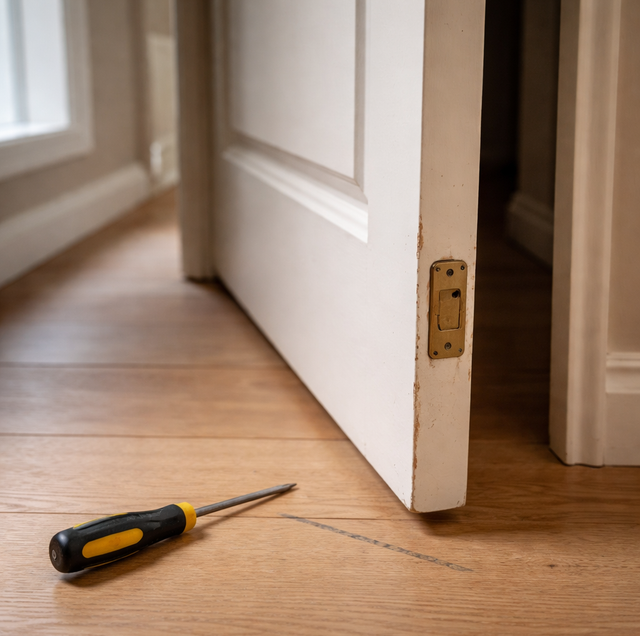
Quick Answer: A sticking interior door usually comes down to one of five things: wood that has swelled with humidity, hinges that have loosened and let the door sag, a frame that has racked as the house settles, paint built up on the edges, or a strike plate the latch no longer lines up with. Find where it binds first with a slip of paper, then fix the cheapest likely cause before you ever reach for sandpaper. Most doors need a tightened hinge, not a planed edge.
A door that used to swing shut with a light push now needs a shoulder, or it drags a rut into the paint on the way past. It is one of the most common calls a home has to make on itself, and the fixes range from two minutes with a screwdriver to a sign that the house itself is moving. The trick is reading the door before you cut into it, because the same dragging edge can mean five very different things.
Why Doors Start Sticking In The First Place
Wood is never truly still. A solid or veneered door sits inside a frame that is also wood, and both respond to the air around them. Understanding the causes below tells you where to look and, more importantly, whether the problem is the door or the building holding it.
Humidity Swelling and Shrinking the Wood: Wood takes on moisture from damp air and gives it back up when the air dries out. In the humid stretch of the year, the fibers swell, the door grows a hair wider and taller, and the edges that had clearance start to rub. In the dry stretch the same door shrinks back, the rubbing eases, and sometimes the latch stops catching because the door now sits looser than the strike expects. This is why a door can bind along the top in one part of the year and rattle in its frame a few months later. The wood is doing exactly what wood does.
A door behaves like a sponge left on the counter: plump and tight when the room is damp, smaller and looser once it dries. That two-way movement is the reason a humidity fix should never remove much material, because whatever you take off in the swollen season is gone for good when the wood shrinks again.
Loose or Sagging Hinges: Every door hangs off screws no thicker than a pencil, carrying real weight through a full swing thousands of times a year. Over time, the top hinge in particular works loose, the screws back out of their holes, and the door tips down on the latch side. Now the top corner on the latch side drags against the frame, or the bottom corner scuffs the floor. A sagging door almost always binds diagonally, one high corner and one low corner, which is a useful tell that separates it from swelling.
The House Settling And Racking The Frame: A door frame is only as square as the wall around it. As a house settles, and especially where expansive clay soils swell and shrink under the slab, the framing can shift out of square and rack the opening from a rectangle toward a subtle parallelogram. When that happens, the door no longer matches its hole, and it binds along a whole edge or catches in a spot that was fine for years. One racked door is usually a local framing issue. Several doors and windows sticking at once, with cracks appearing above the corners, is a different conversation.
Paint And Finish Buildup: Each coat of paint adds thickness, and edges that were never sanded between coats slowly lose their clearance. A door painted several times over the years can stick simply because too much dried paint is packed into a gap that used to be there. This one is easy to spot: the binding lines up with a ridge of paint, and the finish is often marred or shiny where the two painted surfaces have been grinding together.
A Worn or Misaligned Strike: Sometimes the door swings freely but will not latch, or you have to lift or push it to get the bolt to catch. That points at the strike plate, the metal piece on the frame the latch drops into. Loose hinges, a settling frame, or years of slamming can move the door just enough that the latch no longer meets its hole. This reads as a latching problem rather than a dragging one, and it has its own quick fixes.
How To Find Exactly Where It Binds
Guessing wastes effort. Two simple tests tell you precisely where the door and frame are meeting.
The first is the paper test. Slide a slip of paper or a thin feeler into the gap between the door and the frame, all the way around, while the door is closed. Wherever the paper stops or grips, that is where the door is touching. Mark those spots with a pencil. A single tight zone along the top or latch side points one direction; a diagonal pattern of two opposite corners points at sag.
The second is the pencil test for a closer read. Close the door slowly and watch where it first makes contact, or run a pencil flat along the frame stop so it leaves a light line, then close the door and open it to see where the paint transferred. You want to end up with a map of contact points before you touch a tool, so you fix the real spot instead of the obvious one.
The Fixes, From Cheapest To Last Resort
Work through these in order. The early ones cost nothing and reverse cleanly, while the last one removes wood permanently.
Tighten And Shim The Hinges First: Start at the hinges, because a loose one is the single most common cause and the easiest to correct. Open the door, support its weight, and snug every hinge screw with a hand screwdriver, not a drill that can strip the hole. If the door sags on the latch side, the top hinge is the one to check hardest. When a screw just spins without biting, the hole is stripped; a fast trade fix is to tap wood glue and a few wooden toothpicks or a golf tee into the hole, let it set, trim it flush, then drive the screw into fresh material.
To pull a sagging door back up, you can also add a thin cardboard or manufactured shim behind a hinge leaf to shift the door in its frame, or deepen a shallow hinge mortise so the leaf sits flush. Small hinge adjustments move the door a surprising amount at the far corner.
The Longer Screw Trick: This is the fix that solves more sagging doors than any other, and it costs the price of one screw. Remove the center or top screw from the hinge on the frame side and replace it with a screw long enough to pass through the jamb and bite into the wall stud behind it, often around three inches. The short factory screws only grab the jamb; a long screw anchors the hinge to the framing and physically draws the top of the door back toward the hinge side, lifting the dragging latch corner. Do this before you ever consider sanding, because it often erases the bind completely.
Before you sand anything, try the longer-screw fix. Swap the center or top screw on the frame-side hinge for one long enough to reach the wall stud behind the jamb, often around three inches. The short factory screws only grab the jamb, while a long screw anchors the hinge to the framing and draws the sagging latch corner back up.
Address Paint Buildup: If a paint ridge is the culprit, you rarely need to remove wood at all. Lightly scrape and sand the built-up edge back to a clean, even surface, feathering it so no new ridge forms, then touch up the finish. Keep the sanding to the paint layer where you can, and let the finish dry fully before closing the door so the surfaces do not bond together again.
Plane or Sand As A Last Resort: Only when the hinge work and screw trick have not solved it, and the door truly no longer fits its opening, do you remove wood, and only at the spot your paper test marked. Mark the binding zone clearly, take the door down or work it in place, and remove a little material with a sanding block or a hand plane, checking the fit often. Take off as little as possible, seal any bare wood you expose so it does not drink up moisture and swell right back, and stop the moment the door clears. Because wood shrinks in the dry season, over-planing a door swollen in the humid season leaves you with a permanent gap later.
When Sticking Means Something Bigger
Most sticking doors are a hinge or a bit of swollen wood, and you can fix them yourself in an afternoon. A few are the building trying to tell you something.
The warning pattern is several doors and windows starting to stick around the same time, especially paired with diagonal cracks running from the corners of door and window frames, cracks in a slab, floors that feel out of level, or gaps opening where trim meets wall. A single door that binds in the humid months and frees up when the air dries is almost always a seasonal wood-movement issue, harmless and self-correcting. Widespread, worsening sticking with cracks is a possible sign of foundation or structural movement, and no amount of planing will fix the door for long because the opening itself keeps moving. That is the moment to bring in a professional for a structural assessment rather than keep shaving the door.
Frequently Asked Questions
A correctly hung interior door carries an even reveal of roughly an eighth of an inch, about the thickness of a nickel, along the top and both sides, with a slightly larger gap at the bottom for flooring and airflow. If you check that reveal with a coin and find it wide on one side and pinched on the other, the door is out of square in its frame rather than simply swollen, which steers you toward hinge or frame work instead of sanding.
Yes. The longer-screw fix and hinge tightening are both done with the door hanging in place, and even a light edge sanding can be done on a mounted door by wedging it open and working the marked spot. The only jobs that usually call for removing the door are planing a full edge evenly or repainting the edges, since a door laid flat gives you a controlled surface and keeps wet paint from sealing itself to the frame.
A bind confined to the top rail, with the bottom clear, most often means the door has dropped on the latch side from a loose top hinge, which pivots the whole slab so the upper latch corner rises into the frame. It can also happen when a room's warm, moist air rises and swells the top of the door more than the bottom. Check the top hinge screws before assuming it is moisture, because the hinge cause is faster to rule out and quicker to fix.
It helps. Bare wood on the top and bottom edges of a door soaks up airborne moisture far faster than a finished face, so a door with unsealed edges swells more in humid stretches. Sealing all four edges and both faces with primer and paint or a clear finish slows how quickly the wood trades moisture with the air, which softens the seasonal swing. It reduces movement rather than stopping it, since finish slows moisture but does not block it entirely.
It can be, and it usually is not a defect. A freshly installed door and its frame are still settling into the home's actual humidity, and fresh framing lumber continues to dry and move for months after construction. A new door that binds slightly in its first humid season, then settles, is following that curve. One that binds worse each season, or is joined by cracks and other sticking doors, is worth a closer look for a framing or foundation cause.
Rarely for a true interior door, since those seals belong on exterior doors, but an added draft sweep or a stick-on seal along the bottom of an interior door can create a drag that feels exactly like sticking. If your door only catches at the very bottom and you have added any kind of sweep, weatherstrip, or thick threshold, remove or adjust that hardware before you touch the door itself, because the door may be fine.
Book a repair visit if the sticking keeps coming back or cracks are spreading — get a clear read on whether it's a hinge or the foundation. Clover Valley Home Service serves Greater Sacramento, Placer, and El Dorado counties. CSLB #1003154. Call (916) 742-3141.
